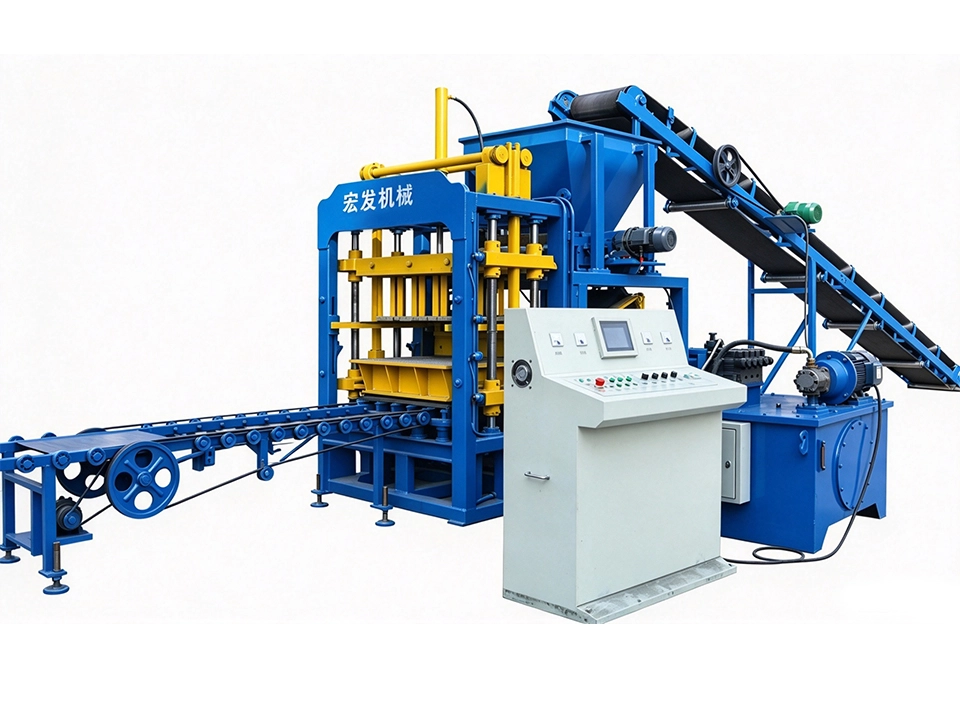
1. Optimized Vibration & Hydraulic System for Dense, Uniform Hollow Blocks
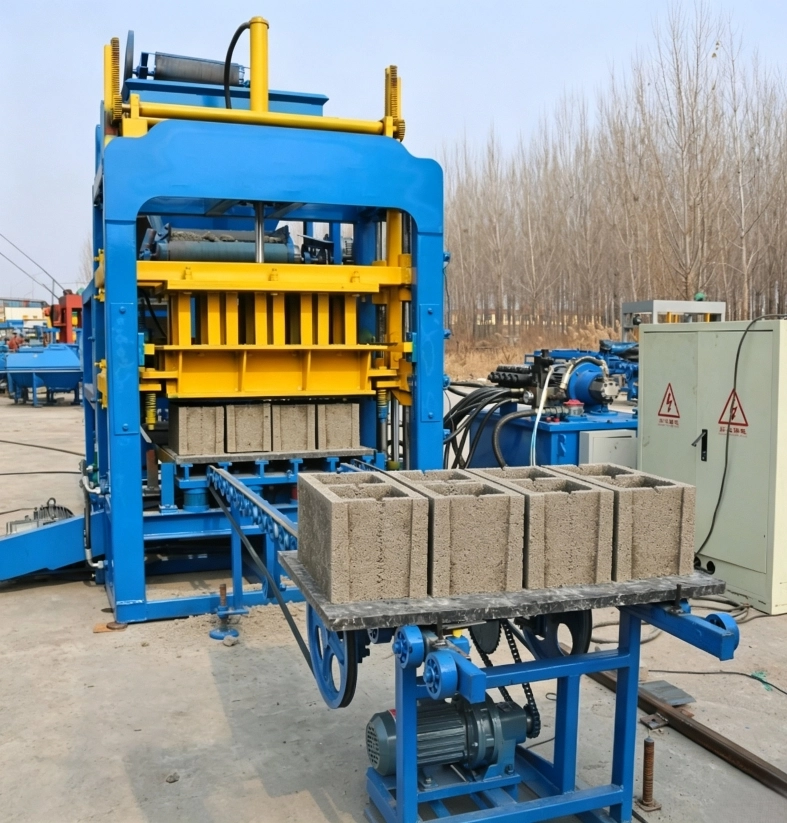
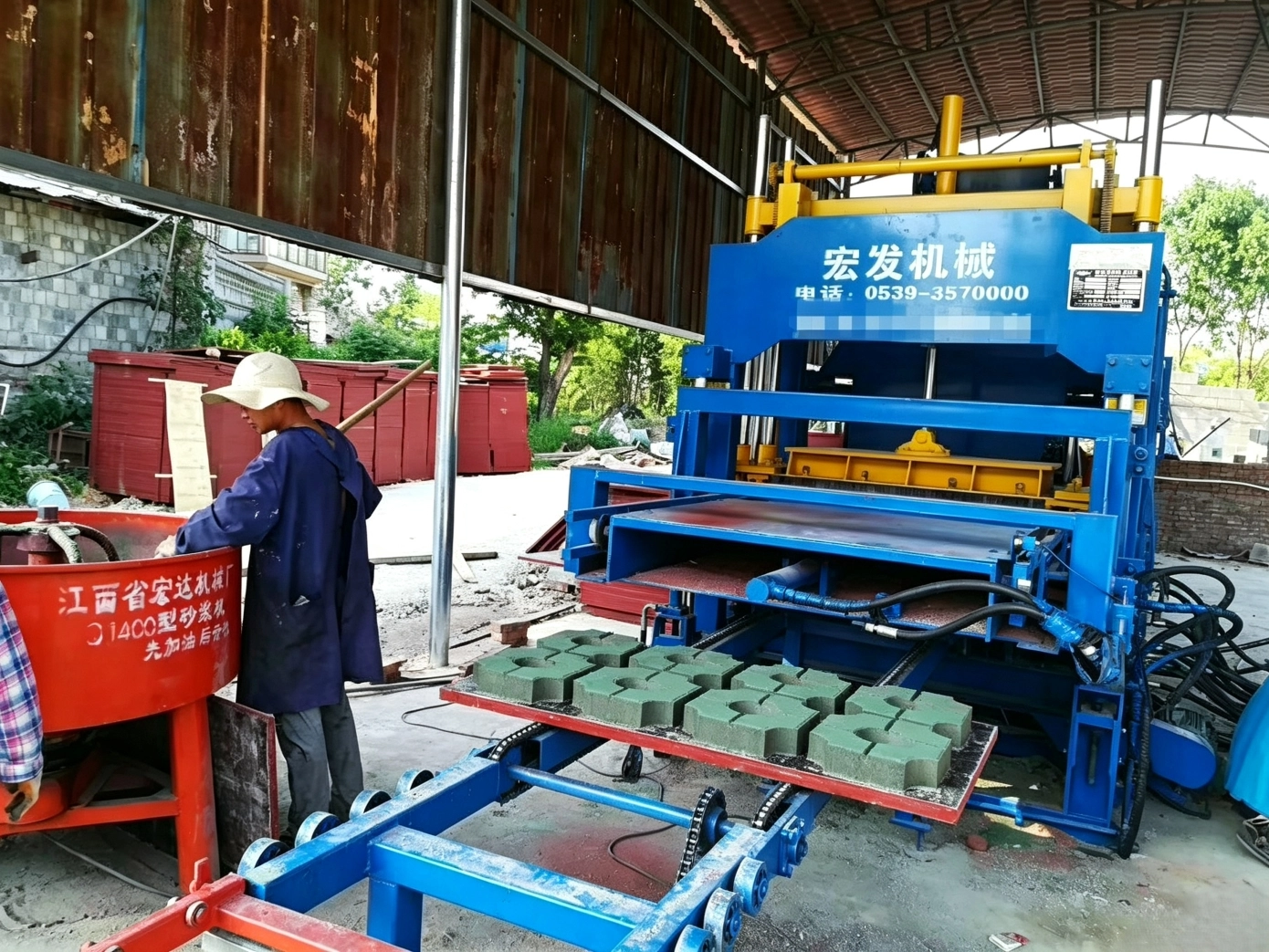
QT4‑15 adopts integrated vibration‑box structure and stable hydraulic drive specially‑tuned for hollow block forming. Hollow block production puts higher demands on vibration transmission, since concrete material needs to fully flow into narrow hollow cavities around core pins inside mould. The powerful evenly‑distributed exciting force drives concrete to fill every corner of mould cavity, eliminating common defects such as insufficient material filling inside hollow holes, honeycombing, rough inner‑hole surface and partial loose walls which frequently happen on ordinary block machines. The finished hollow blocks deliver consistent overall density, neatly‑shaped hollow holes and smooth inner & outer wall surfaces, with minimal chipping or corner‑missing issues during demoulding and handling. Stable‑performance hydraulic assemblies effectively restrain pressure fluctuation throughout each full forming stroke. Every batch of hollow blocks maintains stable compression‑strength indicators, making it much easier for your products to pass local construction‑material quality inspection. Qualified hollow‑block goods help you gain trust from construction contractors, win repeated large‑volume wall‑building project orders and avoid economic losses caused by batch‑rejected blocks on construction sites.
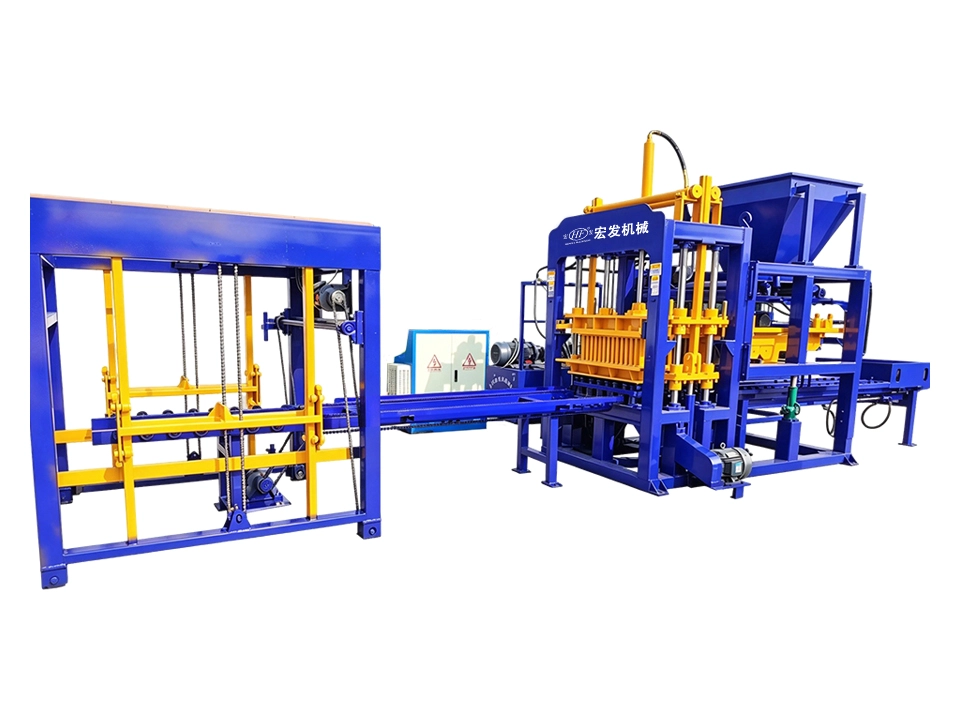
2. High Output & Short Cycle, Cut Unit Production Cost of Hollow Bricks
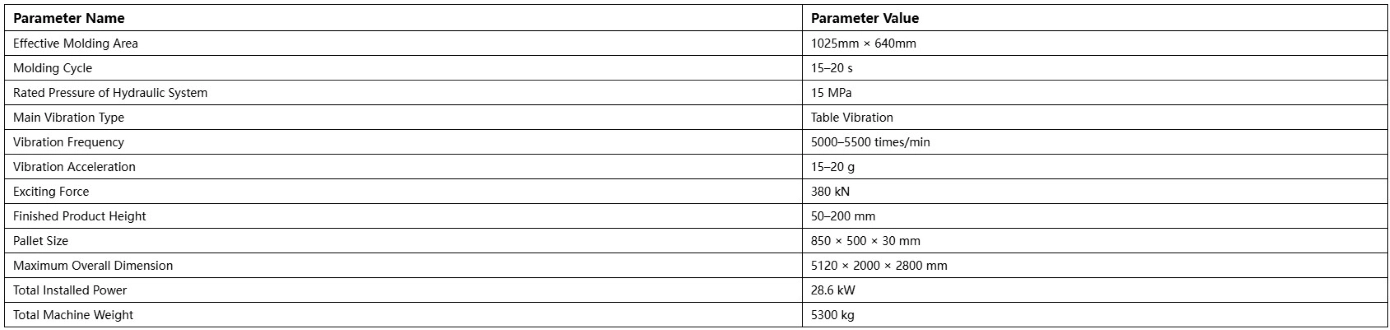
The complete feeding‑vibration‑pressing‑demoulding forming cycle for standard hollow blocks only lasts 20‑25 seconds. Under stable continuous‑shift operation, the machine can churn out large volumes of qualified hollow blocks each working day, enabling you to rapidly deliver big‑batch orders from real‑estate developers, building contractors and material distributors. The matched‑size pallets are easy to source in most overseas markets without expensive custom‑made pallets, so you do not need to put excessive capital into auxiliary pallet inventory. Higher hourly production output spreads fixed workshop rent, equipment depreciation and daily labor expenditure across far more finished hollow‑block units. It directly brings down comprehensive unit‑production‑cost for each hollow brick. When competing for building‑material tenders and bulk supply contracts, lower unit‑cost gives you obvious price‑competitive advantages, expanding your profit margin on every hollow‑block order without sacrificing finished‑product quality.
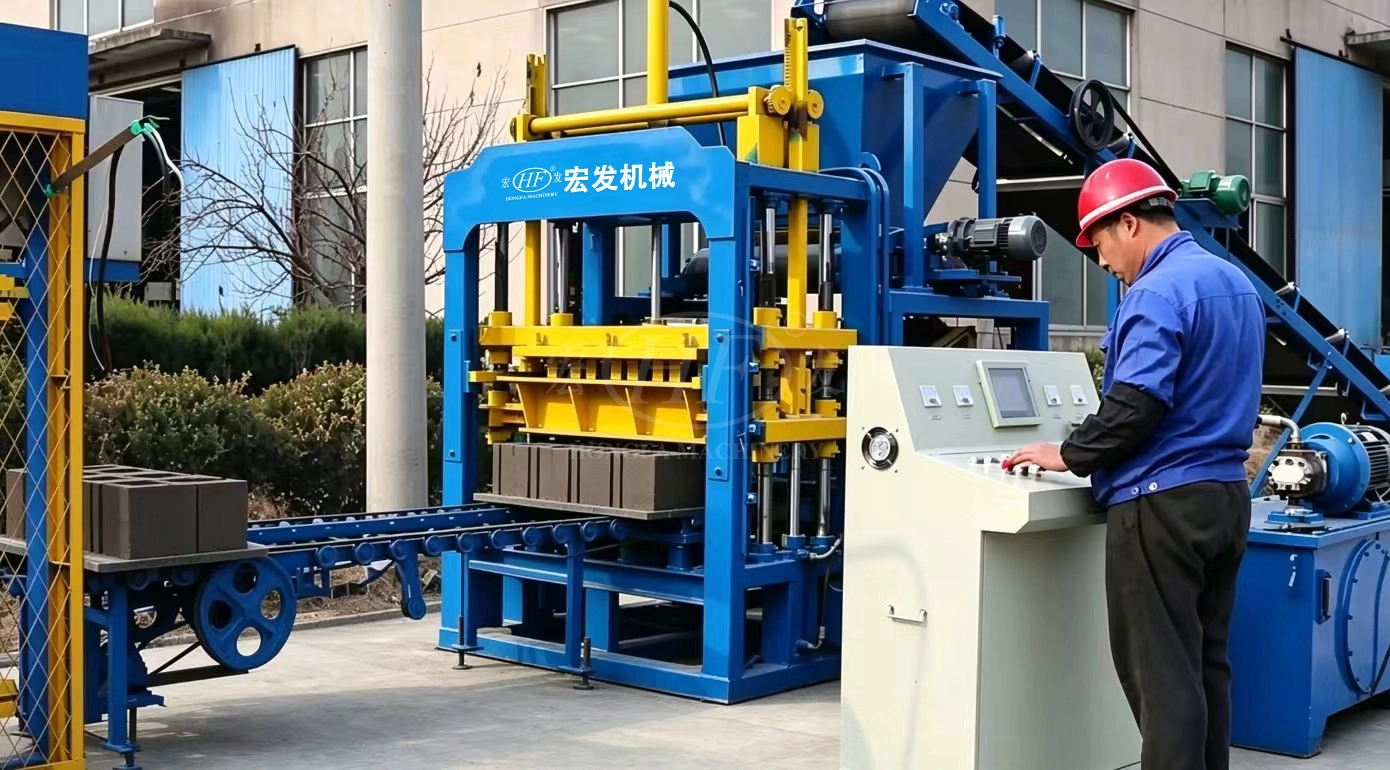
3. Wide Raw Material Adaptability for Hollow Block Production, Save Raw Material Expense
QT4‑15 shows outstanding tolerance for diversified local‑available raw materials for hollow‑block manufacturing. Qualified hollow blocks can be produced using ordinary sand, crushed stone, stone powder, fly ash, furnace slag, coal gangue and multiple types of construction‑recycled aggregates. Instead of relying on costly high‑grade dedicated aggregates imported or transported from far‑away locations, brick‑plant operators can make full use of local industrial solid‑waste resources to replace a considerable proportion of cement and natural stone materials. Even when raw‑material quality has minor fluctuations commonly seen in local markets, you can adjust mixing proportion formulas accordingly and still obtain qualified hollow‑block finished goods. It greatly cuts down your overall raw‑material procurement and logistics expenses. You are able to hedge against frequent cement and aggregate price surges in regional markets, and keep stable profit levels for hollow‑block production whether raw‑material market goes up or down. It also helps your plant meet local green‑production requirements for waste‑recycling building materials.
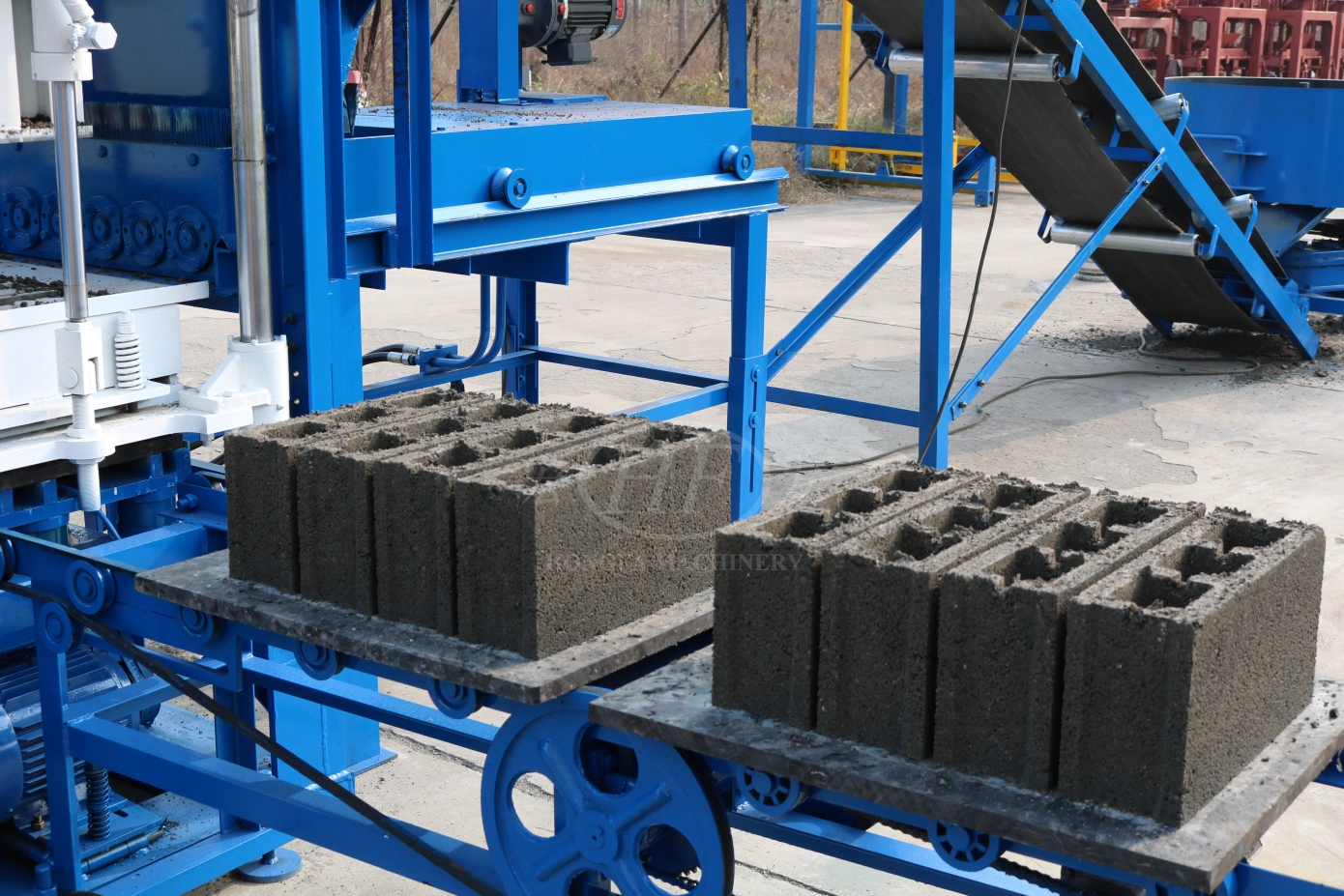
4. Interchangeable Hollow Block Mould, Flexible for Multiple Hollow Block Specifications
One set of standard hollow‑block manganese‑steel mould is supplied free together with the machine unit. All custom‑ordered hollow‑block moulds adopt carburizing‑heat‑treatment plus precise wire‑cutting processing craft. Mould cavity dimension keeps high‑precision tolerance, and mould body possesses strong anti‑impact and anti‑abrasion performance against long‑term concrete friction. When market demands change, you can finish mould‑replacement workflow without major disassembly or reconstruction on main machine host. By switching different hollow‑block mould sets, you can produce hollow blocks with various hole layouts, hole‑quantities, wall‑thickness and overall outer dimensions. A single production host can satisfy diverse purchasing requests from different building‑project clients. You do not have to invest capital into multiple separate block‑making hosts just for manufacturing different‑size hollow bricks. It significantly lowers your total equipment investment risk, reduces factory‑floor space occupied by idle standby machines and improves overall equipment‑utilization rate for your brick‑making workshop.
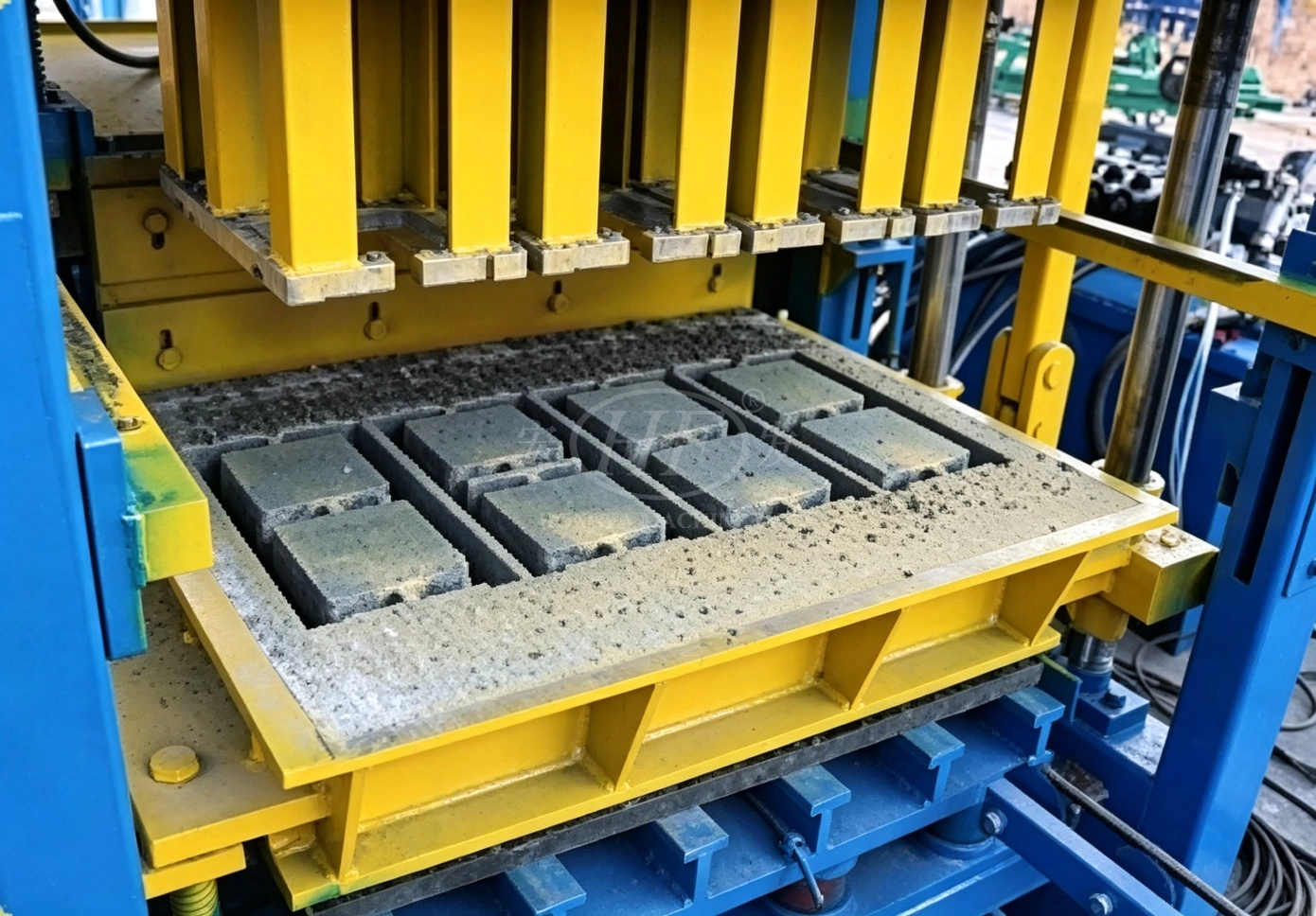
5. Sturdy Heavy Frame, Less Breakdown for Long‑time Hollow Block Mass Production
The main machine frame is integrally welded by heavy‑duty high‑thick square steel profiles, which is purposely engineered for non‑stop long‑time mass‑production scenarios of hollow blocks. Hollow‑block forming procedure generates continuous high‑frequency vibration impact transferring to whole frame structure. This robust‑built frame effectively resists twisting, bending and weld‑joint loosening risks after months and years of heavy‑load cyclic operation. It avoids unexpected production halts triggered by frame‑deformation‑related failures. Core transmission and hydraulic components are selected for heavy‑duty continuous‑running conditions, lowering probability of sudden component breakdown during rush‑order periods. When you are facing tight‑delivery‑schedule hollow‑block contracts for large‑scale construction sites, fewer unplanned equipment‑stoppages mean you can stick to promised delivery timeline. You can prevent order‑penalty losses, client‑complaint risks and business‑reputation damage caused by frequent machine malfunctions in peak‑production seasons.
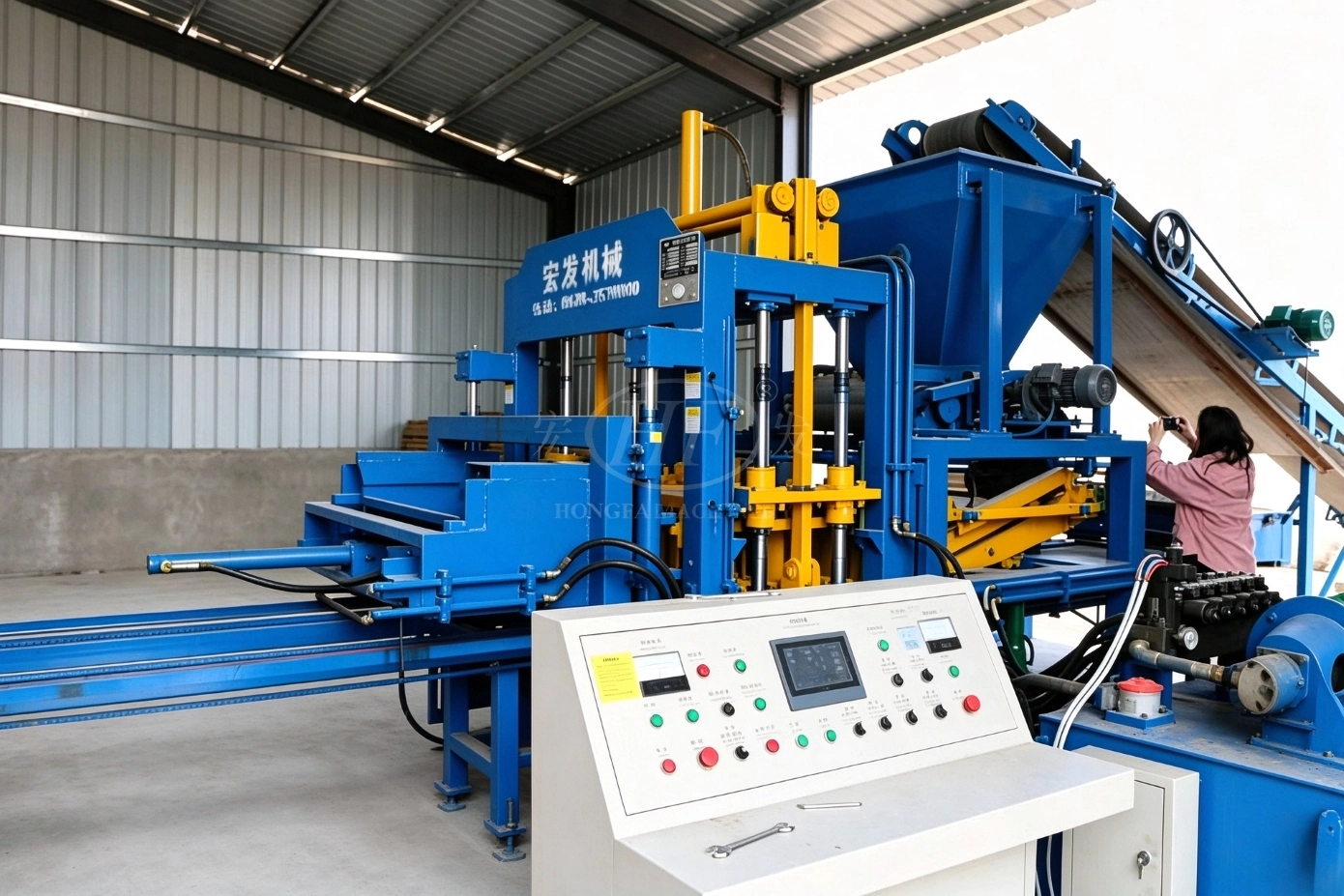
6. Compact Layout & Convenient Shipment, Low Investment Threshold for Hollow Block Factory
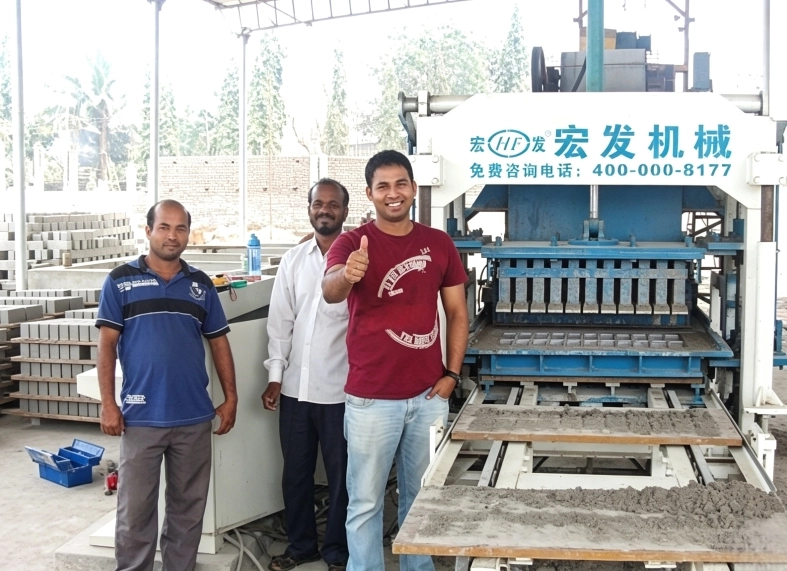
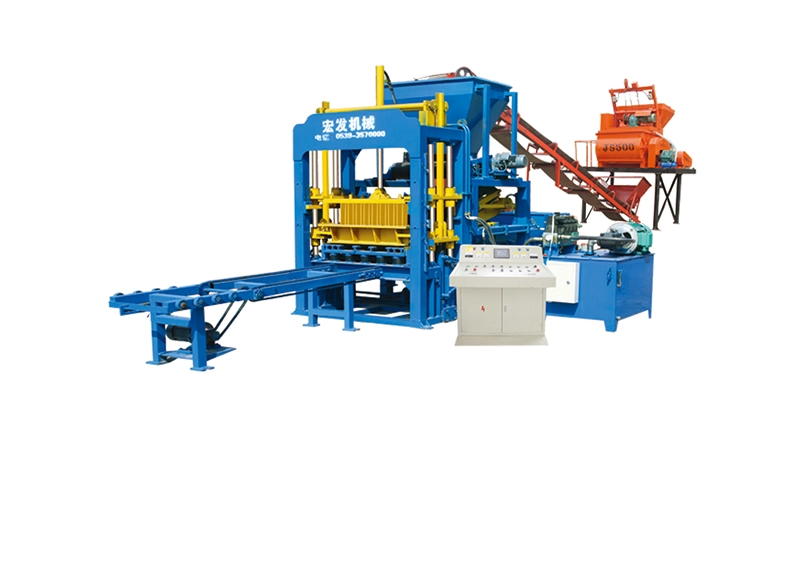
QT4‑15 adopts space‑saving compact overall layout, so you do not need to rent or build extra‑large‑size workshop premises to launch hollow‑block manufacturing business. It works well for small‑and‑medium‑size brick factories, new‑start‑up investors and workshop‑renovation‑upgrade projects. The whole complete production package can fit inside one standard 20ft ocean‑freight container. It helps overseas buyers save considerable container‑space‑related ocean‑shipping cost and simplifies complicated cross‑border container‑logistics‑arrangement work. The human‑friendly operation workflow reduces requirements for highly‑skilled professional operators. General‑level workshop workers can master full hollow‑block‑production operating steps after short‑period training. You can avoid continuous high‑salary expenditure for recruiting experienced senior‑technicians. Overall capital threshold for opening‑up a hollow‑block‑production plant becomes much lower, making this unit a practical cost‑effective option for new‑comers entering local building‑material supply market.
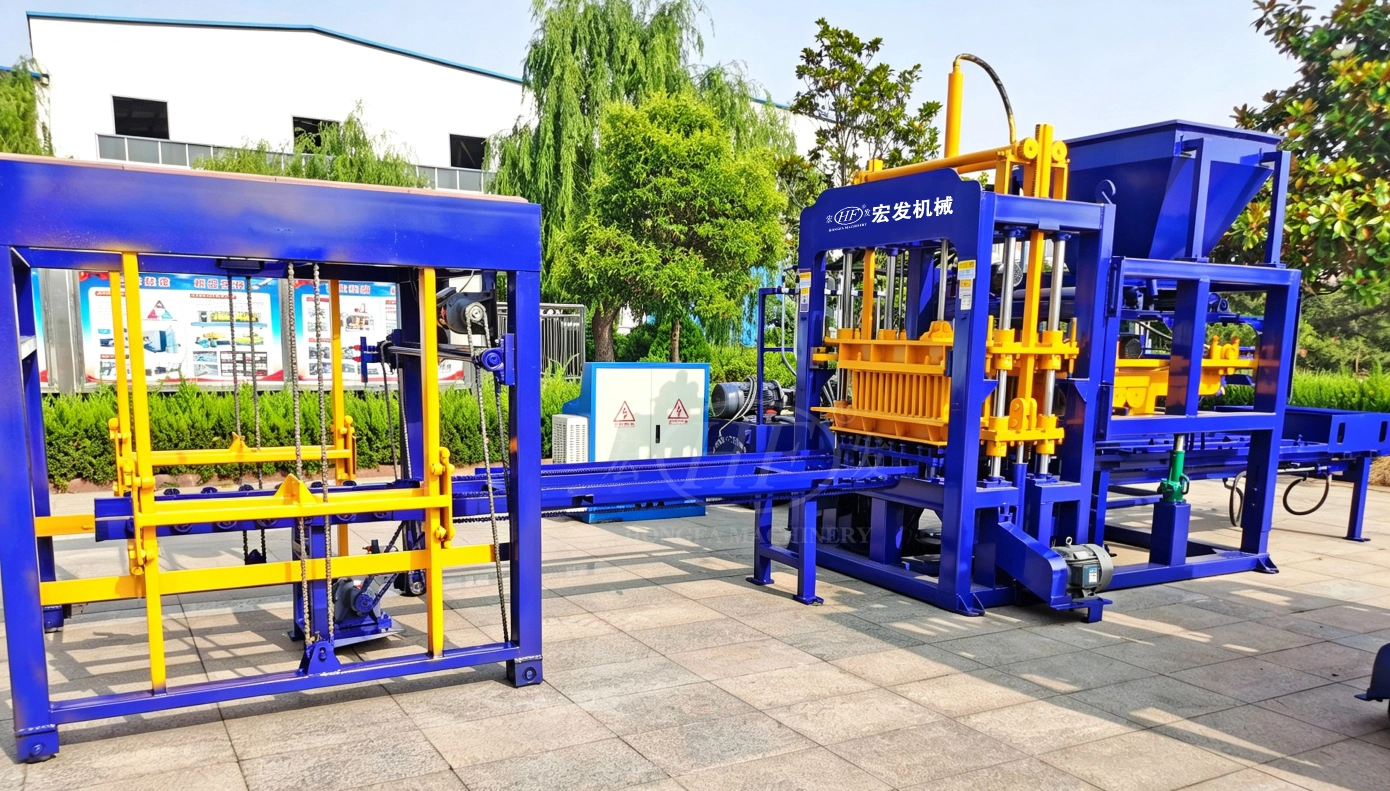
1. Optimized Vibration & Hydraulic System for Dense, Uniform Hollow Blocks
QT4‑15 adopts integrated vibration‑box structure and stable hydraulic drive specially‑tuned for hollow block forming. Hollow block production puts higher demands on vibration transmission, since concrete material needs to fully flow into narrow hollow cavities around core pins inside mould. The powerful evenly‑distributed exciting force drives concrete to fill every corner of mould cavity, eliminating common defects such as insufficient material filling inside hollow holes, honeycombing, rough inner‑hole surface and partial loose walls which frequently happen on ordinary block machines. The finished hollow blocks deliver consistent overall density, neatly‑shaped hollow holes and smooth inner & outer wall surfaces, with minimal chipping or corner‑missing issues during demoulding and handling. Stable‑performance hydraulic assemblies effectively restrain pressure fluctuation throughout each full forming stroke. Every batch of hollow blocks maintains stable compression‑strength indicators, making it much easier for your products to pass local construction‑material quality inspection. Qualified hollow‑block goods help you gain trust from construction contractors, win repeated large‑volume wall‑building project orders and avoid economic losses caused by batch‑rejected blocks on construction sites.
2. High Output & Short Cycle, Cut Unit Production Cost of Hollow Bricks
The complete feeding‑vibration‑pressing‑demoulding forming cycle for standard hollow blocks only lasts 20‑25 seconds. Under stable continuous‑shift operation, the machine can churn out large volumes of qualified hollow blocks each working day, enabling you to rapidly deliver big‑batch orders from real‑estate developers, building contractors and material distributors. The matched‑size pallets are easy to source in most overseas markets without expensive custom‑made pallets, so you do not need to put excessive capital into auxiliary pallet inventory. Higher hourly production output spreads fixed workshop rent, equipment depreciation and daily labor expenditure across far more finished hollow‑block units. It directly brings down comprehensive unit‑production‑cost for each hollow brick. When competing for building‑material tenders and bulk supply contracts, lower unit‑cost gives you obvious price‑competitive advantages, expanding your profit margin on every hollow‑block order without sacrificing finished‑product quality.
3. Wide Raw Material Adaptability for Hollow Block Production, Save Raw Material Expense
QT4‑15 shows outstanding tolerance for diversified local‑available raw materials for hollow‑block manufacturing. Qualified hollow blocks can be produced using ordinary sand, crushed stone, stone powder, fly ash, furnace slag, coal gangue and multiple types of construction‑recycled aggregates. Instead of relying on costly high‑grade dedicated aggregates imported or transported from far‑away locations, brick‑plant operators can make full use of local industrial solid‑waste resources to replace a considerable proportion of cement and natural stone materials. Even when raw‑material quality has minor fluctuations commonly seen in local markets, you can adjust mixing proportion formulas accordingly and still obtain qualified hollow‑block finished goods. It greatly cuts down your overall raw‑material procurement and logistics expenses. You are able to hedge against frequent cement and aggregate price surges in regional markets, and keep stable profit levels for hollow‑block production whether raw‑material market goes up or down. It also helps your plant meet local green‑production requirements for waste‑recycling building materials.
4. Interchangeable Hollow Block Mould, Flexible for Multiple Hollow Block Specifications
One set of standard hollow‑block manganese‑steel mould is supplied free together with the machine unit. All custom‑ordered hollow‑block moulds adopt carburizing‑heat‑treatment plus precise wire‑cutting processing craft. Mould cavity dimension keeps high‑precision tolerance, and mould body possesses strong anti‑impact and anti‑abrasion performance against long‑term concrete friction. When market demands change, you can finish mould‑replacement workflow without major disassembly or reconstruction on main machine host. By switching different hollow‑block mould sets, you can produce hollow blocks with various hole layouts, hole‑quantities, wall‑thickness and overall outer dimensions. A single production host can satisfy diverse purchasing requests from different building‑project clients. You do not have to invest capital into multiple separate block‑making hosts just for manufacturing different‑size hollow bricks. It significantly lowers your total equipment investment risk, reduces factory‑floor space occupied by idle standby machines and improves overall equipment‑utilization rate for your brick‑making workshop.
5. Sturdy Heavy Frame, Less Breakdown for Long‑time Hollow Block Mass Production
The main machine frame is integrally welded by heavy‑duty high‑thick square steel profiles, which is purposely engineered for non‑stop long‑time mass‑production scenarios of hollow blocks. Hollow‑block forming procedure generates continuous high‑frequency vibration impact transferring to whole frame structure. This robust‑built frame effectively resists twisting, bending and weld‑joint loosening risks after months and years of heavy‑load cyclic operation. It avoids unexpected production halts triggered by frame‑deformation‑related failures. Core transmission and hydraulic components are selected for heavy‑duty continuous‑running conditions, lowering probability of sudden component breakdown during rush‑order periods. When you are facing tight‑delivery‑schedule hollow‑block contracts for large‑scale construction sites, fewer unplanned equipment‑stoppages mean you can stick to promised delivery timeline. You can prevent order‑penalty losses, client‑complaint risks and business‑reputation damage caused by frequent machine malfunctions in peak‑production seasons.
6. Compact Layout & Convenient Shipment, Low Investment Threshold for Hollow Block Factory
QT4‑15 adopts space‑saving compact overall layout, so you do not need to rent or build extra‑large‑size workshop premises to launch hollow‑block manufacturing business. It works well for small‑and‑medium‑size brick factories, new‑start‑up investors and workshop‑renovation‑upgrade projects. The whole complete production package can fit inside one standard 20ft ocean‑freight container. It helps overseas buyers save considerable container‑space‑related ocean‑shipping cost and simplifies complicated cross‑border container‑logistics‑arrangement work. The human‑friendly operation workflow reduces requirements for highly‑skilled professional operators. General‑level workshop workers can master full hollow‑block‑production operating steps after short‑period training. You can avoid continuous high‑salary expenditure for recruiting experienced senior‑technicians. Overall capital threshold for opening‑up a hollow‑block‑production plant becomes much lower, making this unit a practical cost‑effective option for new‑comers entering local building‑material supply market.

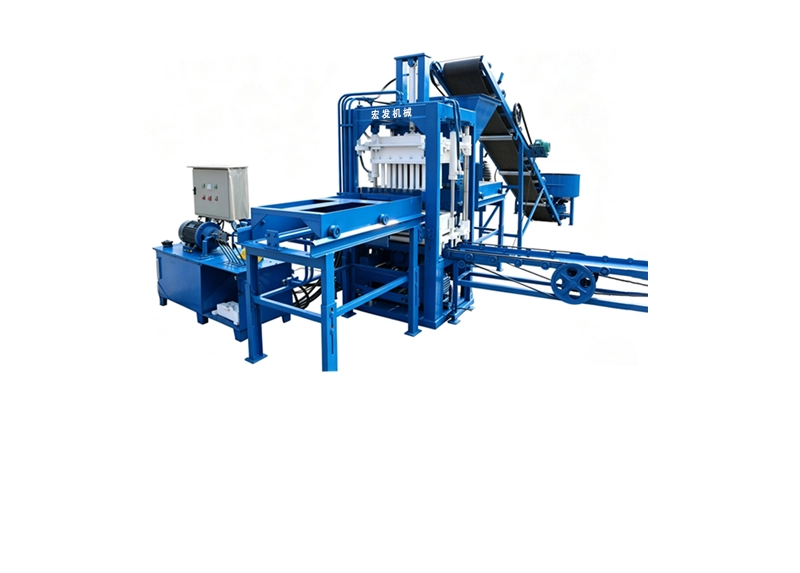 QT3-15 Automatic Concrete Hollow Block Making Machine | Stable High Output for Hollow Blocks
QT3-15 automatic hollow block machine is specially built for hollow block production. It forms multiple hollow blocks in...
 QT3‑15 Fully‑Automatic Solid Brick Making Machine | Concrete Standard Solid Brick Production Line
Hongfa QT3‑15 fully‑automatic solid brick making machine produces 39 pieces of 240×115×53mm standard solid bricks per mo...
QT4-15 Automatic Concrete Brick Making Machine
QT4-15 automatic concrete brick making machine is an upgraded version of QTY4-20 with higher output and better product q...
Shandong Hongfa Scientific Industrial&Trading Co.,Ltd ©️2026Copyright © LU ICP B 16041216-4