1. Table‑mold resonance plus dual‑direction compression, flat pavers with low warpage and lower risk of customer rejection & penalty
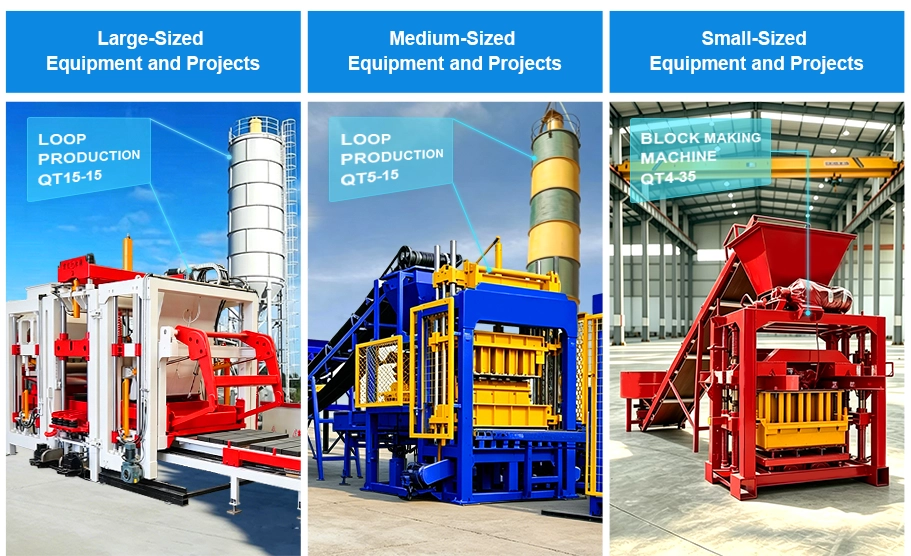
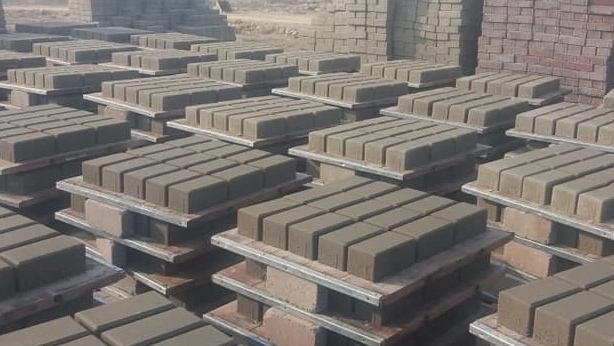
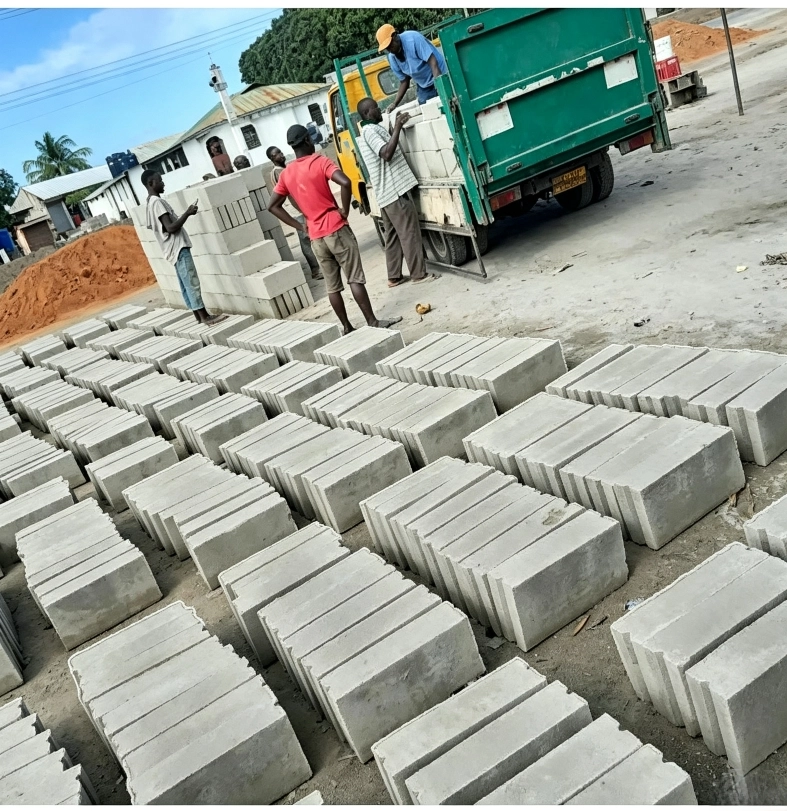
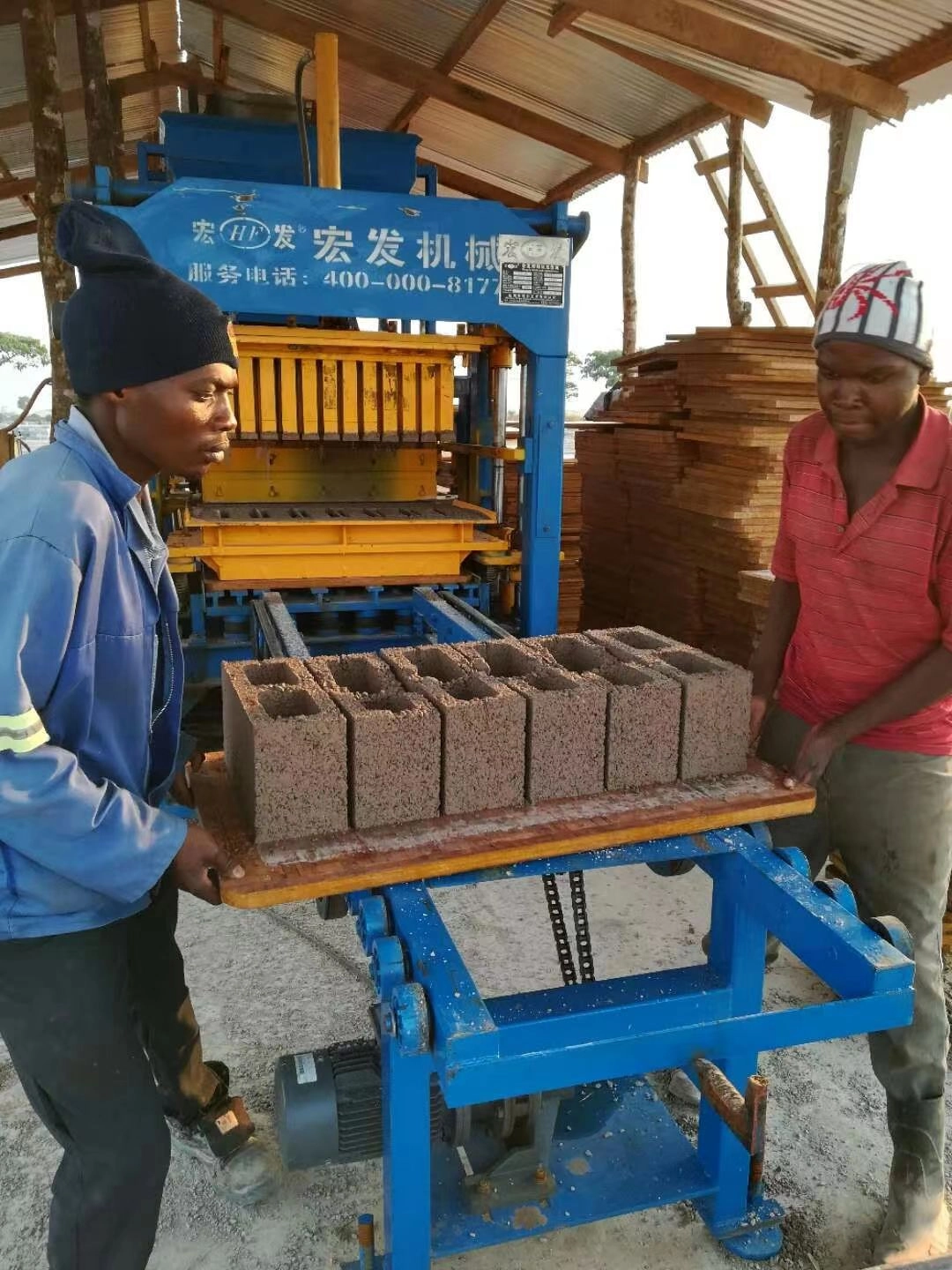
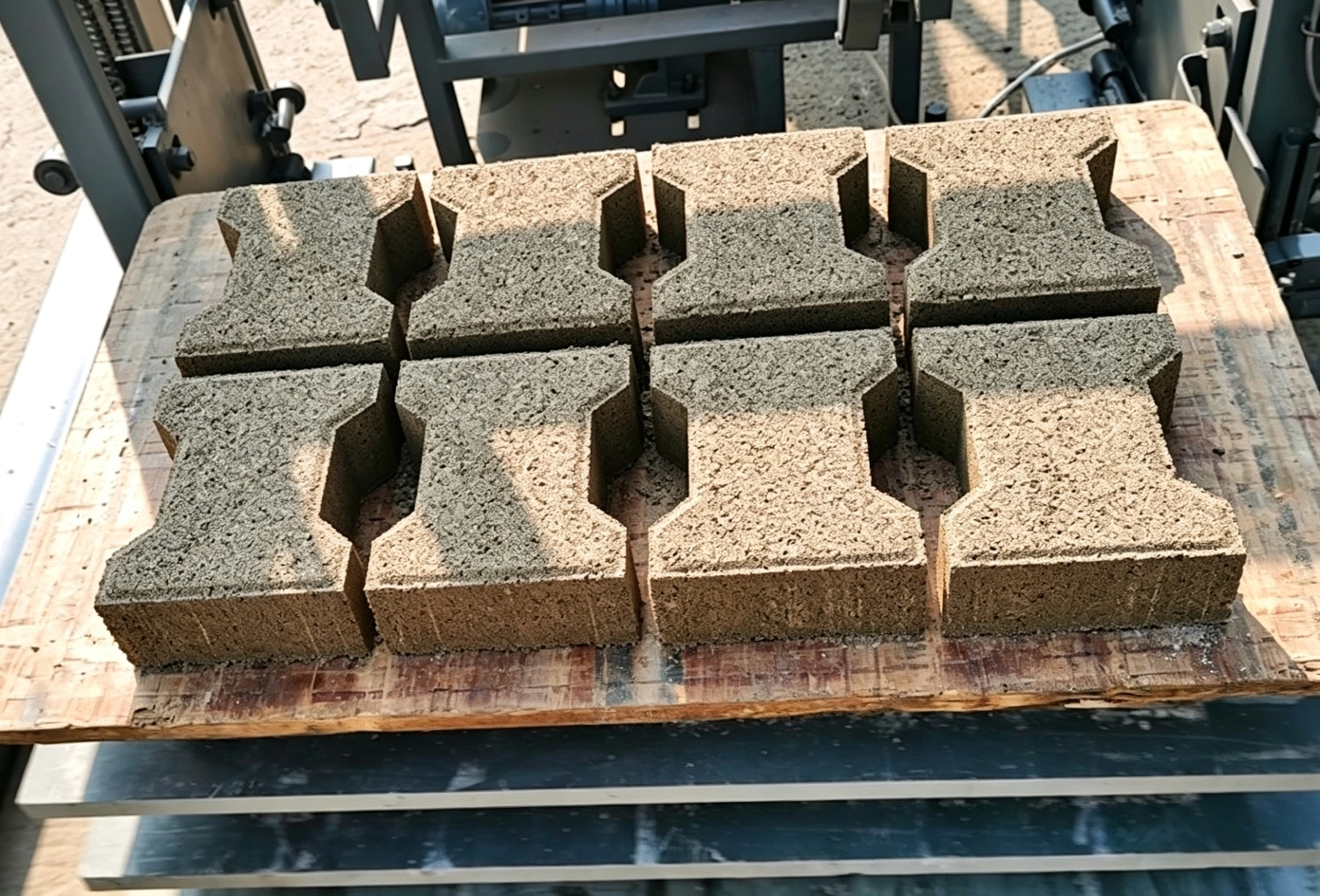
Overseas municipal projects apply strict acceptance standards for paving blocks. Warped, uneven or chipped pavers will trigger batch rejection and financial deduction. Many brick machines work fine for solid blocks yet tend to produce warped pavers after curing due to uneven force distribution, leading to massive finished‑goods scrap. QT4‑25 combines table‑mold resonance and upper‑lower compression. Exciting force is adjustable for different paver types. Both base mix and facing mix inside mould cavity get even compaction. Produced pavers show good flatness with minimal warpage and tight dimensional tolerance as well as intact edges. Permeable pavers, interlocking blocks and colored paving bricks meet overseas municipal standards for both appearance and strength. It reduces economic loss caused by appearance defects and helps you secure long‑term municipal supply contracts.
2. Base‑color facing dual‑layer feeding, consistent colored surface for high‑margin municipal orders
Colored paving blocks bring higher profit than ordinary construction bricks. However, many brick machines suffer uneven facing thickness, color mixing or partial color fading, resulting in poor‑looking products which cannot support premium pricing. QT4‑25 is designed for dual‑layer feeding with optional color‑facing hopper. Color facing material and base aggregate are fed separately with controllable facing thickness. Each paver keeps uniform surface color without color‑mixing or base‑material exposure. You can mass‑produce grey permeable blocks as well as red, yellow and multi‑color paving bricks for high‑value park, pedestrian street and plaza contracts. No extra dedicated color‑brick machine is required, and your profit margin rises with existing production setup.
3. Quick‑change wear‑resistant moulds, support full‑range municipal paver specifications for mixed‑spec order fulfillment
Overseas municipal tenders frequently require mixed paver types: sidewalk permeable blocks, driveway interlocking pavers and grass‑planting blocks within one single contract. Slow mould‑changing machines make these mixed‑spec orders hard to fulfill and you may lose the whole project. QT4‑25 allows fast mould replacement without major host reconstruction. One machine manufactures permeable pavers, interlocking blocks, grass‑planting blocks, curb stones and other municipal concrete products. You can rapidly switch brick types to satisfy multi‑item municipal delivery schedules. During off‑peak seasons, it can shift to solid bricks and hollow blocks to avoid line idleness and maximize machine revenue. Cr12MoV quenched wear‑resistant moulds withstand heavy impact in high‑volume paver production and lower recurring mould‑replacement expenditure.
4. Broad solid‑waste compatibility, local residues for base layer to cut per‑paver cost and strengthen bidding competitiveness
Paving‑block production consumes huge volumes of aggregates. If you fully rely on expensive virgin sand and stone, profit margins will shrink sharply under competitive municipal bidding. QT4‑25 allows high proportion of fly ash, steel slag, tailings sand, crushed construction waste and other local industrial residues in the base layer. Only a thin top facing layer consumes costly colored cement aggregates. Cheap or even zero‑cost local waste materials greatly reduce overall raw‑material expense per paver. You gain greater pricing flexibility for municipal tender offers, helping you win bids while preserving decent profit.
5. High green‑brick strength after molding, allow direct multi‑layer stacking, reduce breakage and save labor cost
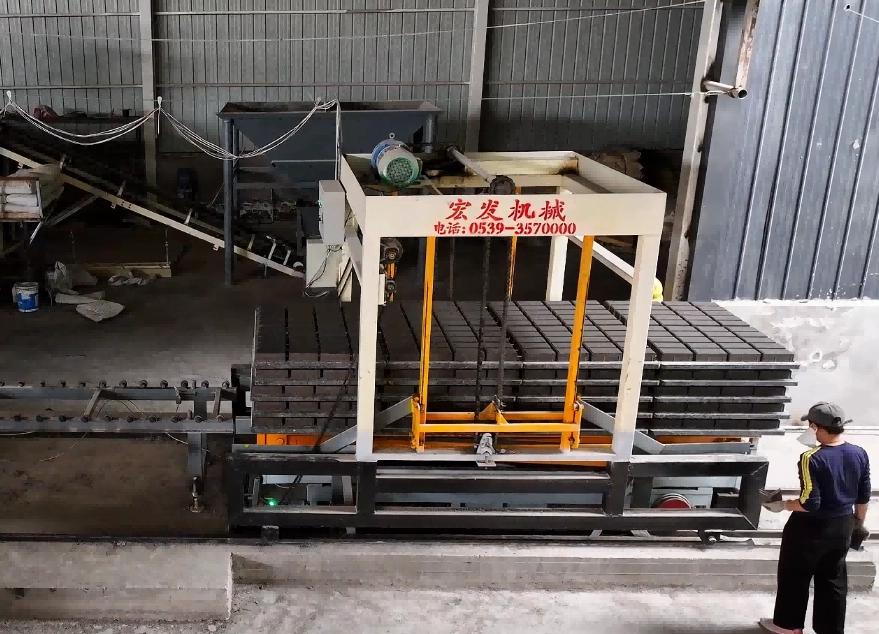
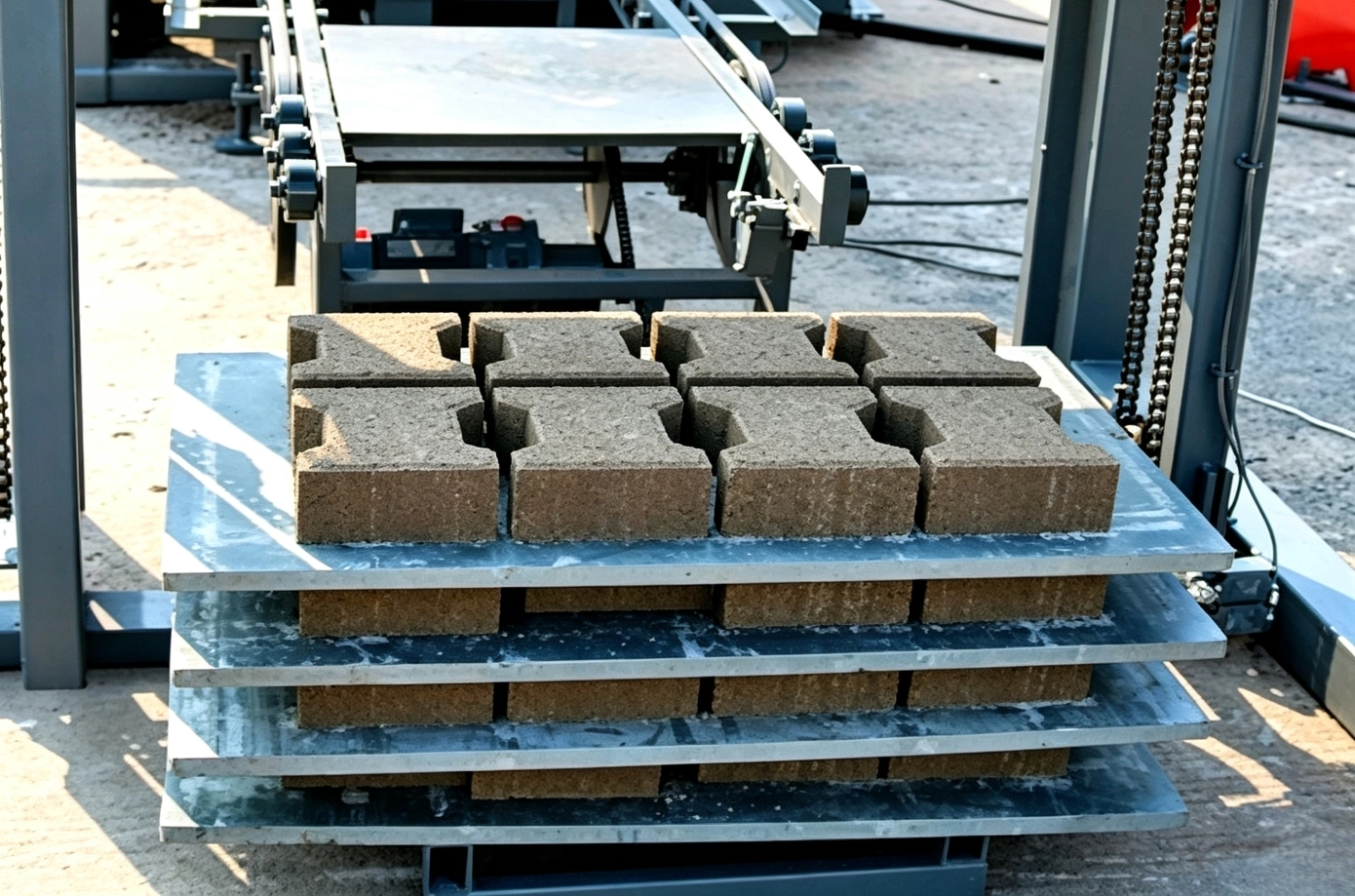
Fresh demoulded pavers are relatively thin. Many machines produce weak green pavers which can only be laid in single‑layer storage, demanding large labour force for careful handling. Chipping and breakage frequently happen during transfer and cause material waste. QT4‑25 table‑mold resonance plus dual compression grants decent structural strength to fresh paver green bodies. Demoulded pavers can be stacked multi‑layer directly without single‑layer curing storage. When matched with automatic block stacker, stacking is completed right after demoulding. Manual brick‑handling positions are largely cut down. Both labor expenditure and reject rate from transportation collision drop, delivering more qualified pavers with same raw‑material input for municipal clients.
6. Compact footprint for paver production, lower upfront investment for new‑entrants into municipal building‑material market
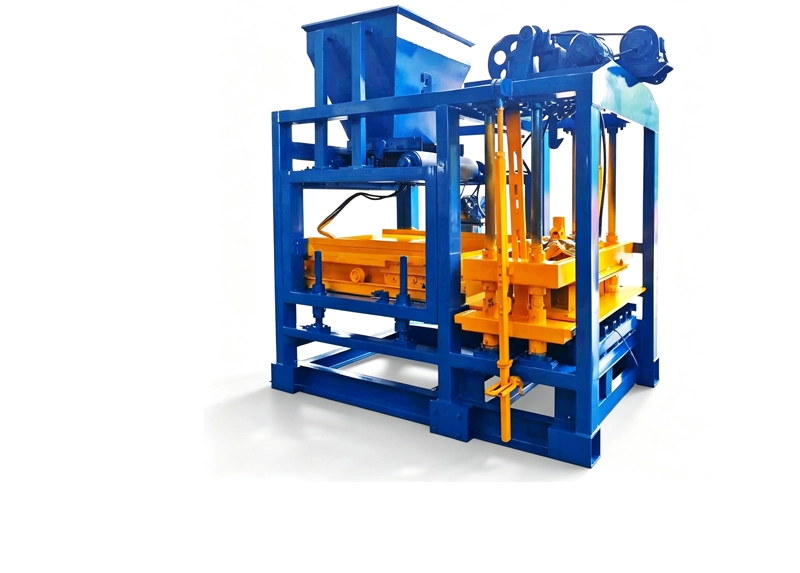
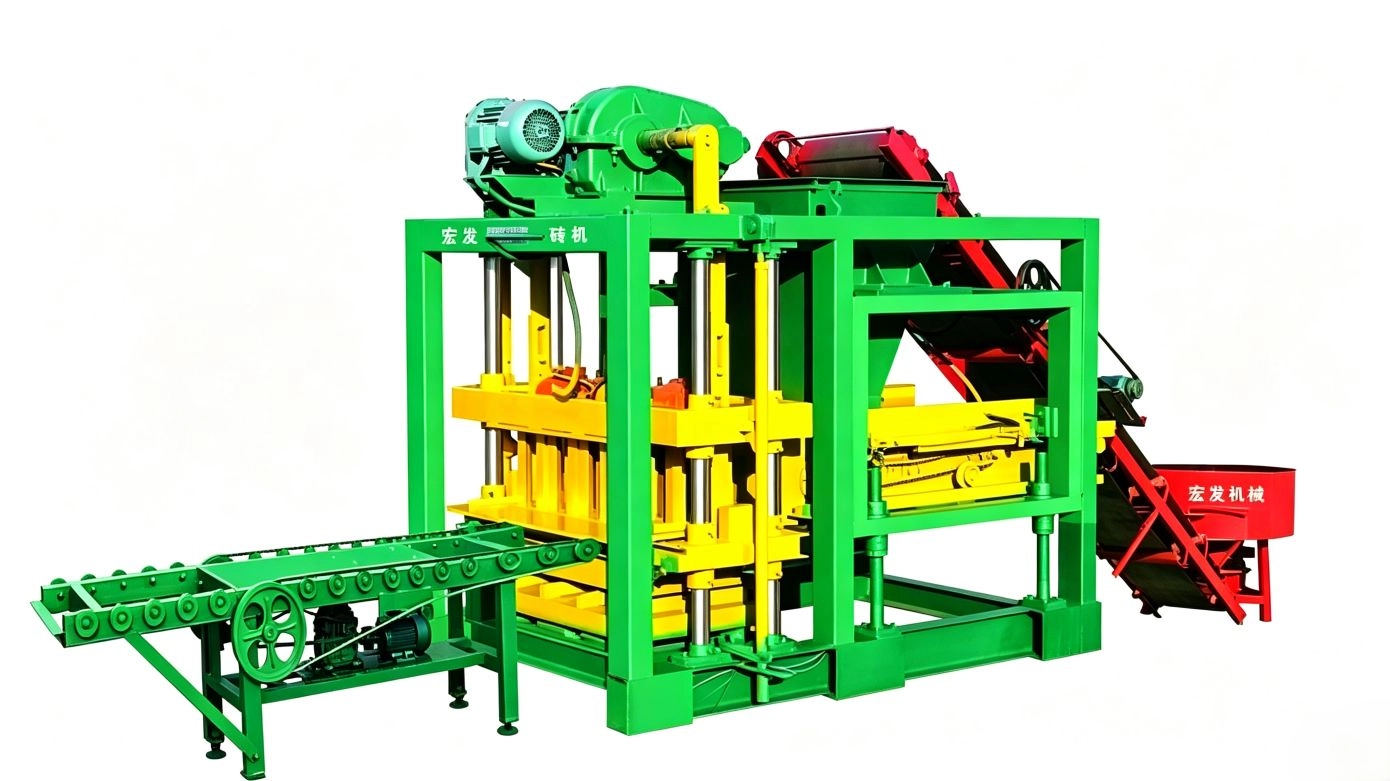
Many overseas small‑scale investors want to enter municipal paving‑block business but lack large‑size workshops. Large paver machines demand heavy civil‑work and plant investment, bringing heavy initial capital pressure. QT4‑25 full‑set production line only requires 50‑80 m² working area. The main unit is compact without strict requirements for plant height or foundation. Old workshops can be retrofitted for production. Configuration can be built‑up step‑by‑step: you may start with core host and add batching & mixing modules later. Small‑medium investors can launch paver manufacturing without huge plant investment, undertake local road and landscape contracts, and speed up return‑on‑investment.
1. Table‑mold resonance plus dual‑direction compression, flat pavers with low warpage and lower risk of customer rejection & penalty
Overseas municipal projects apply strict acceptance standards for paving blocks. Warped, uneven or chipped pavers will trigger batch rejection and financial deduction. Many brick machines work fine for solid blocks yet tend to produce warped pavers after curing due to uneven force distribution, leading to massive finished‑goods scrap. QT4‑25 combines table‑mold resonance and upper‑lower compression. Exciting force is adjustable for different paver types. Both base mix and facing mix inside mould cavity get even compaction. Produced pavers show good flatness with minimal warpage and tight dimensional tolerance as well as intact edges. Permeable pavers, interlocking blocks and colored paving bricks meet overseas municipal standards for both appearance and strength. It reduces economic loss caused by appearance defects and helps you secure long‑term municipal supply contracts.
2. Base‑color facing dual‑layer feeding, consistent colored surface for high‑margin municipal orders
Colored paving blocks bring higher profit than ordinary construction bricks. However, many brick machines suffer uneven facing thickness, color mixing or partial color fading, resulting in poor‑looking products which cannot support premium pricing. QT4‑25 is designed for dual‑layer feeding with optional color‑facing hopper. Color facing material and base aggregate are fed separately with controllable facing thickness. Each paver keeps uniform surface color without color‑mixing or base‑material exposure. You can mass‑produce grey permeable blocks as well as red, yellow and multi‑color paving bricks for high‑value park, pedestrian street and plaza contracts. No extra dedicated color‑brick machine is required, and your profit margin rises with existing production setup.
3. Quick‑change wear‑resistant moulds, support full‑range municipal paver specifications for mixed‑spec order fulfillment
Overseas municipal tenders frequently require mixed paver types: sidewalk permeable blocks, driveway interlocking pavers and grass‑planting blocks within one single contract. Slow mould‑changing machines make these mixed‑spec orders hard to fulfill and you may lose the whole project. QT4‑25 allows fast mould replacement without major host reconstruction. One machine manufactures permeable pavers, interlocking blocks, grass‑planting blocks, curb stones and other municipal concrete products. You can rapidly switch brick types to satisfy multi‑item municipal delivery schedules. During off‑peak seasons, it can shift to solid bricks and hollow blocks to avoid line idleness and maximize machine revenue. Cr12MoV quenched wear‑resistant moulds withstand heavy impact in high‑volume paver production and lower recurring mould‑replacement expenditure.
4. Broad solid‑waste compatibility, local residues for base layer to cut per‑paver cost and strengthen bidding competitiveness
Paving‑block production consumes huge volumes of aggregates. If you fully rely on expensive virgin sand and stone, profit margins will shrink sharply under competitive municipal bidding. QT4‑25 allows high proportion of fly ash, steel slag, tailings sand, crushed construction waste and other local industrial residues in the base layer. Only a thin top facing layer consumes costly colored cement aggregates. Cheap or even zero‑cost local waste materials greatly reduce overall raw‑material expense per paver. You gain greater pricing flexibility for municipal tender offers, helping you win bids while preserving decent profit.
5. High green‑brick strength after molding, allow direct multi‑layer stacking, reduce breakage and save labor cost
Fresh demoulded pavers are relatively thin. Many machines produce weak green pavers which can only be laid in single‑layer storage, demanding large labour force for careful handling. Chipping and breakage frequently happen during transfer and cause material waste. QT4‑25 table‑mold resonance plus dual compression grants decent structural strength to fresh paver green bodies. Demoulded pavers can be stacked multi‑layer directly without single‑layer curing storage. When matched with automatic block stacker, stacking is completed right after demoulding. Manual brick‑handling positions are largely cut down. Both labor expenditure and reject rate from transportation collision drop, delivering more qualified pavers with same raw‑material input for municipal clients.
6. Compact footprint for paver production, lower upfront investment for new‑entrants into municipal building‑material market
Many overseas small‑scale investors want to enter municipal paving‑block business but lack large‑size workshops. Large paver machines demand heavy civil‑work and plant investment, bringing heavy initial capital pressure. QT4‑25 full‑set production line only requires 50‑80 m² working area. The main unit is compact without strict requirements for plant height or foundation. Old workshops can be retrofitted for production. Configuration can be built‑up step‑by‑step: you may start with core host and add batching & mixing modules later. Small‑medium investors can launch paver manufacturing without huge plant investment, undertake local road and landscape contracts, and speed up return‑on‑investment.
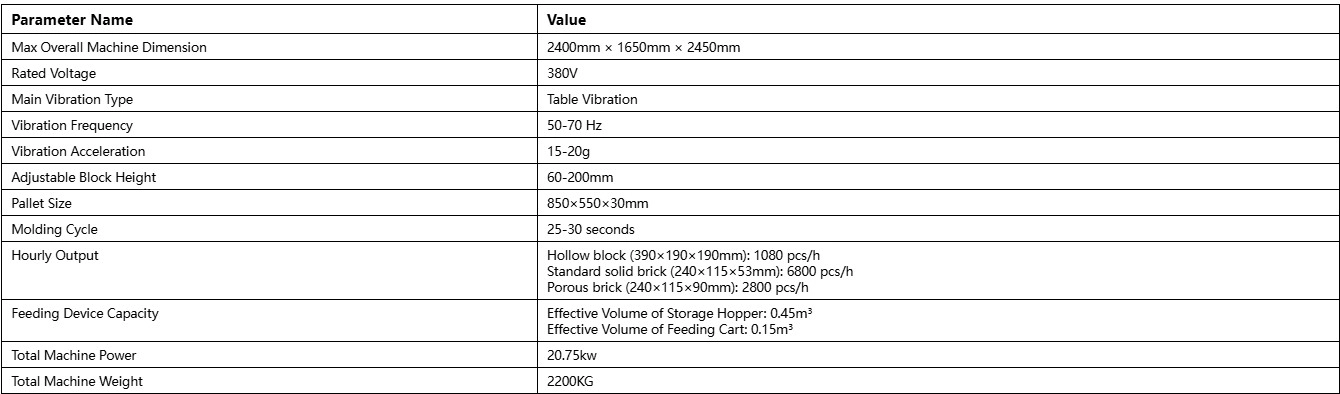

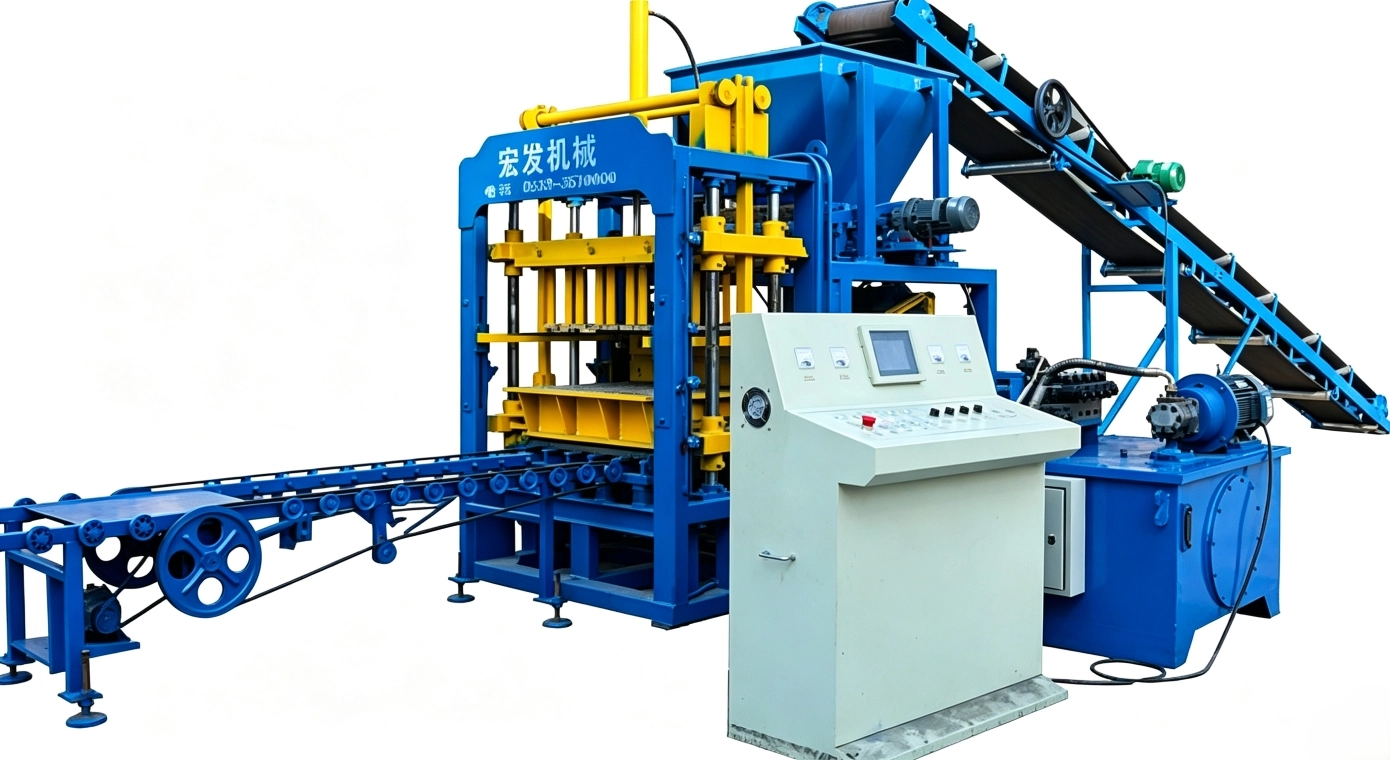
QT4‑25C Automatic Brick Making Machine | High‑output Forming Equipment For Concrete Hollow Blocks
QT4‑25C automatic brick making main machine is optimized for mass‑production of standard 390×190×190 mm hollow blocks. I...
 QT4‑25C Automatic Concrete Brick Making Machine
QT4‑25C automatic concrete brick making main machine adopts combined table‑and‑mold vibration with 25‑second molding cyc...
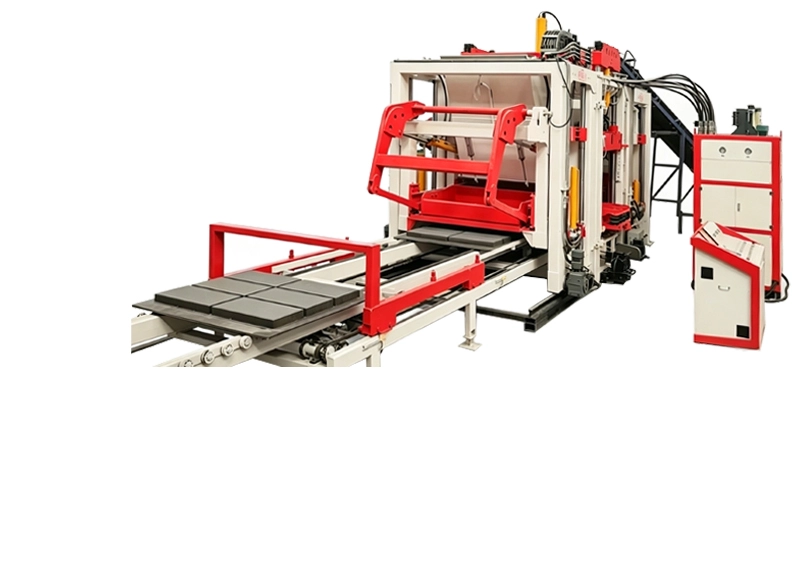 HF18 Pallet‑free Automatic Brick Making Machine | High‑output Complete Production Line For Concrete Solid Standard Bricks
HF18 pallet‑free fully‑automatic brick making machine is optimized for mass‑volume solid standard brick manufacturing. I...
Shandong Hongfa Scientific Industrial&Trading Co.,Ltd ©️2026Copyright © LU ICP B 16041216-4