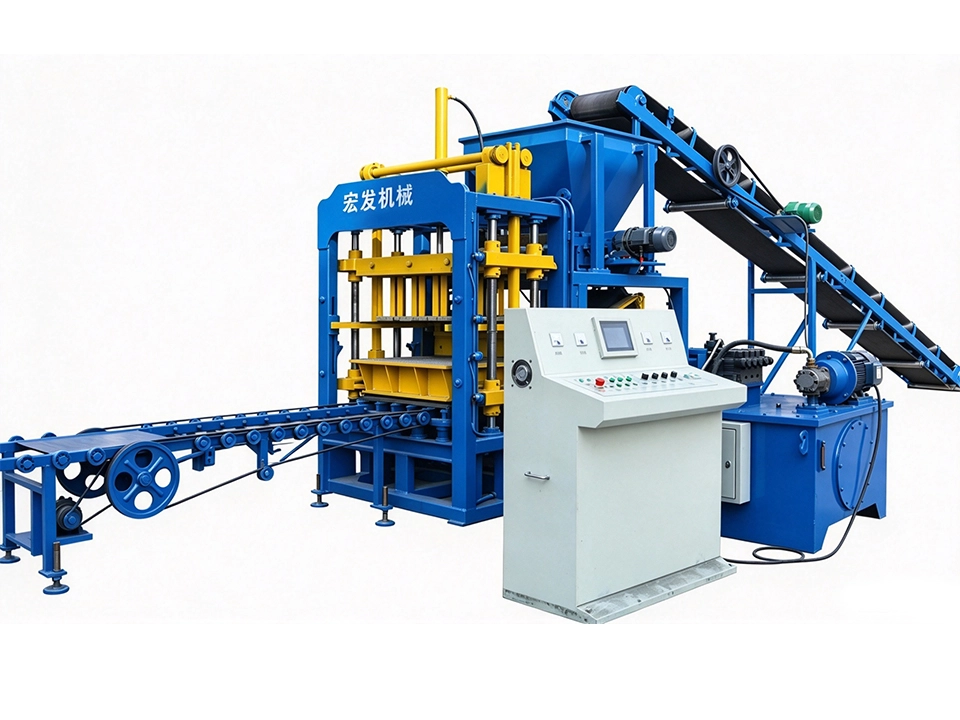
1. Wide Raw‑Material Compatibility and High Solid‑Waste Mixing Ratio, Multi‑product Capacity for Diverse Demands
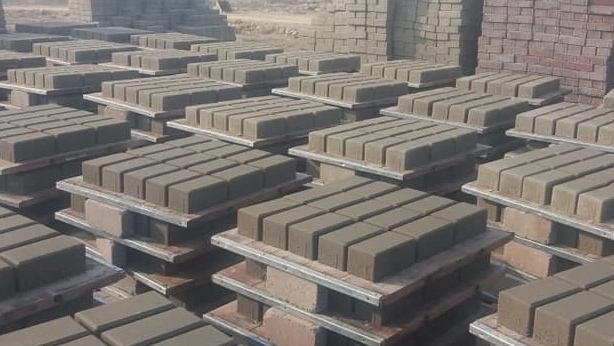
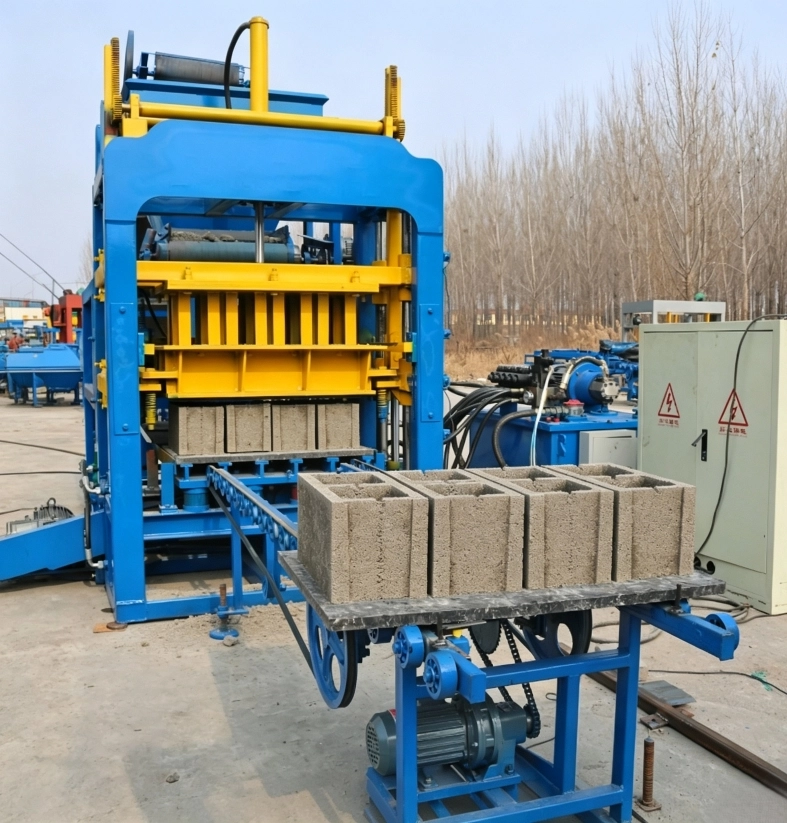
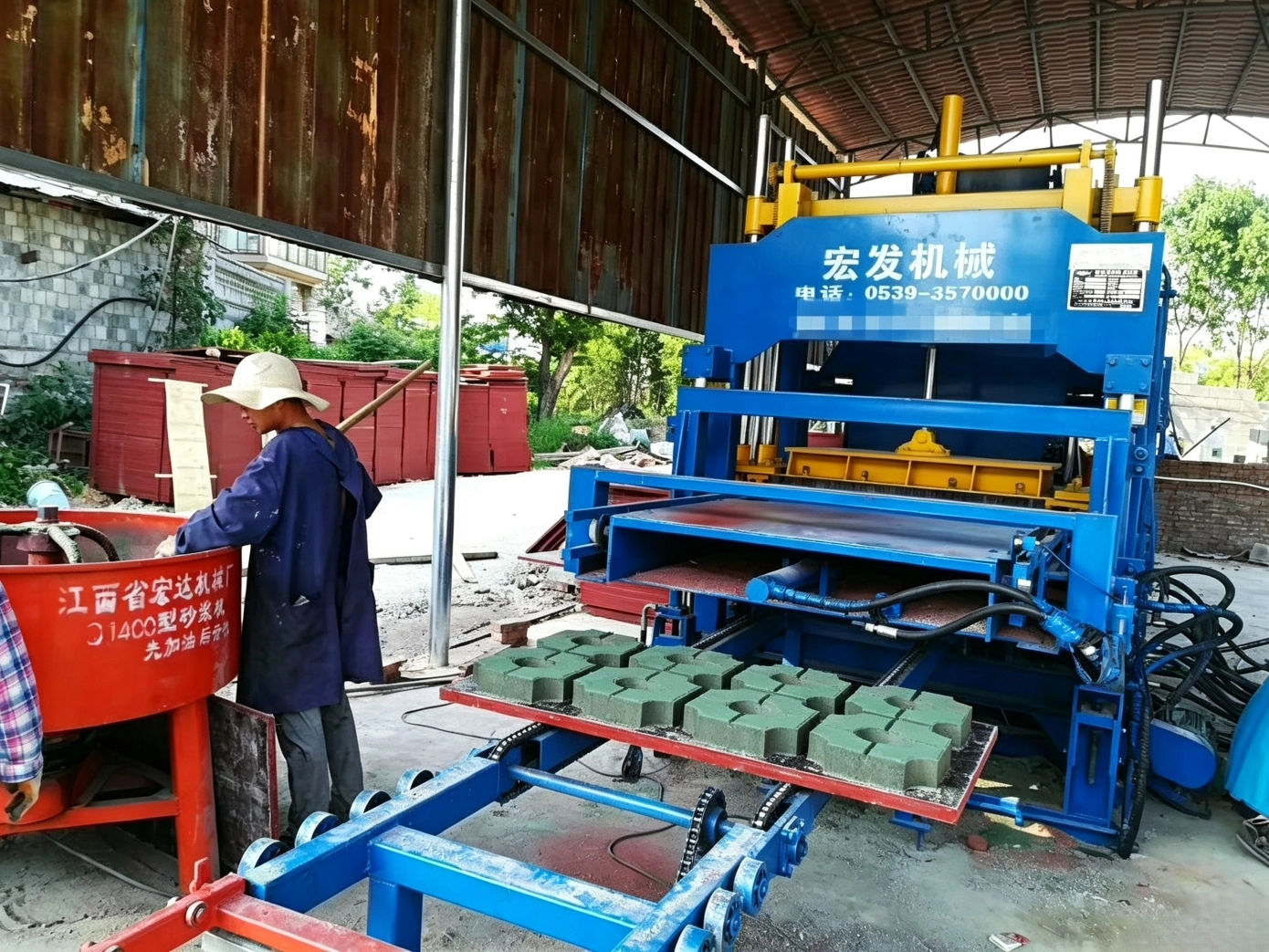
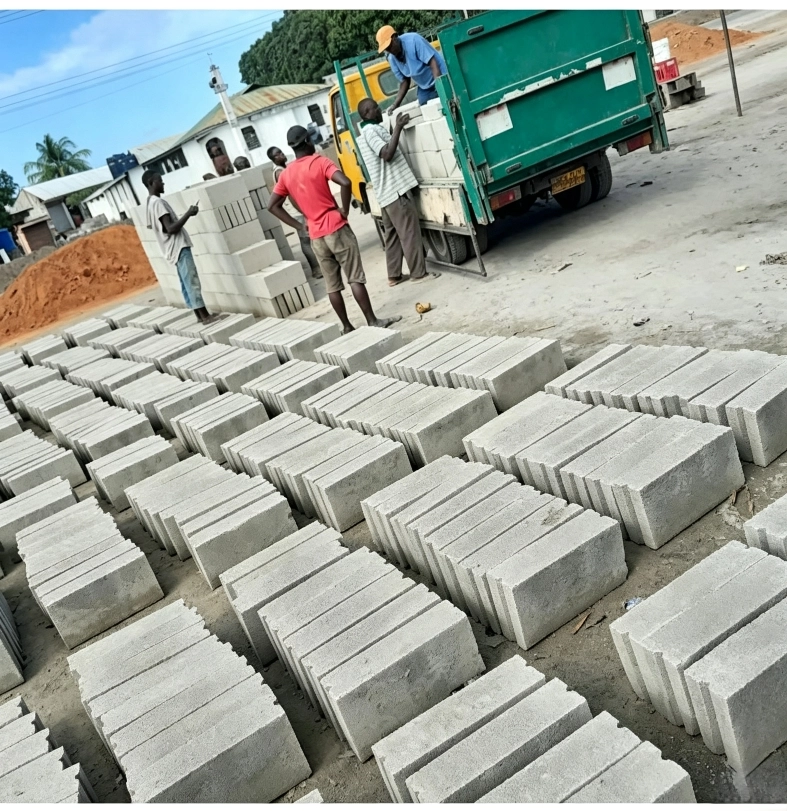
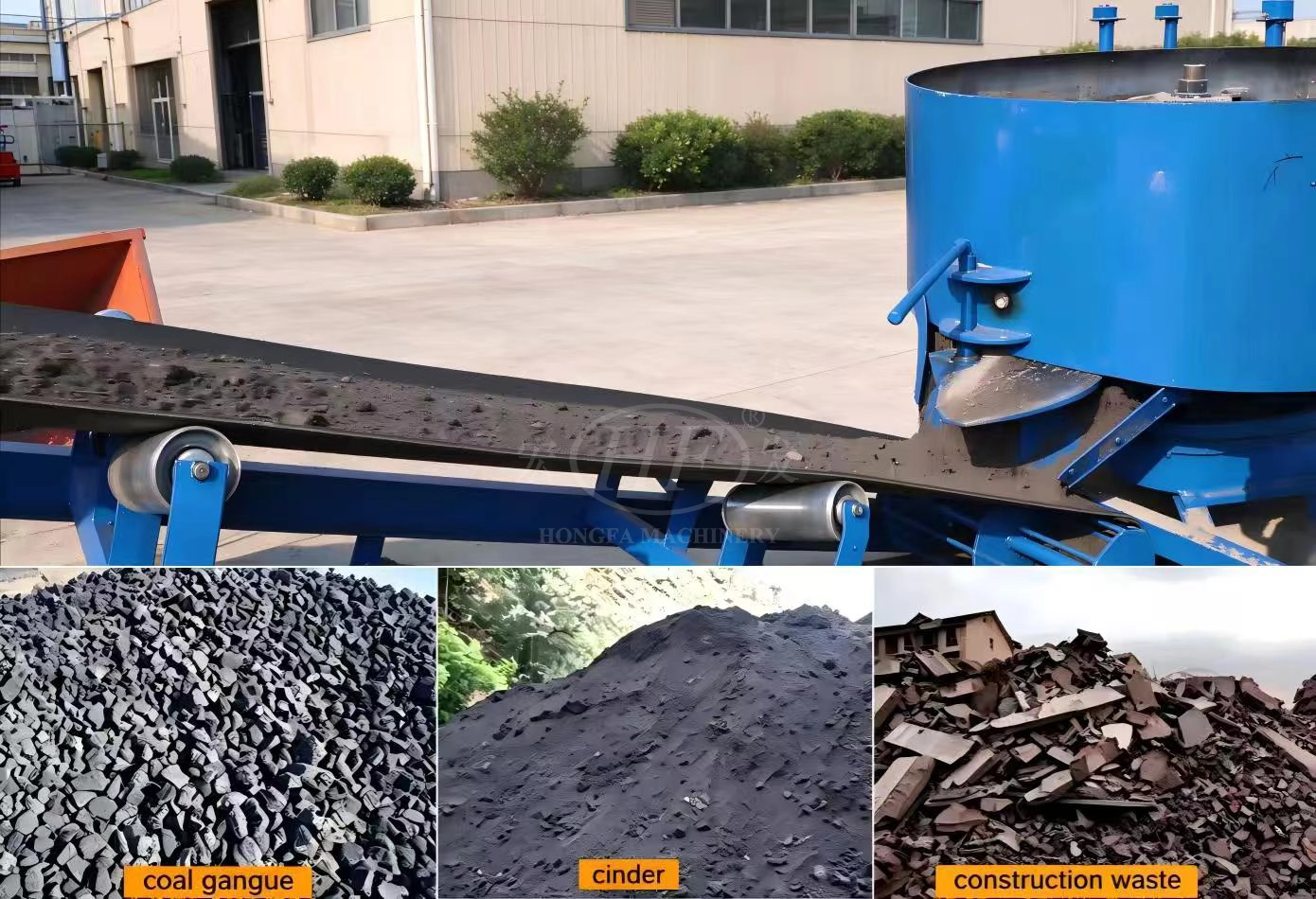
The QT4‑15B automatic hydraulic concrete brick making machine features excellent raw‑material compatibility. Various industrial residues including fly ash, cinder and coal gangue can be used for production. The maximum mixing ratio of fly ash can reach 70%, which efficiently consumes industrial waste and complies with policies for eco‑friendly building‑material production. Simply by replacing molds, it can mass‑produce hollow blocks, standard bricks, eight‑hole bricks, paving bricks, grass‑planting bricks, curbstones and other building‑material products. Multiple types of products are realized on one single machine, which greatly cuts equipment procurement costs and meets diversified production orders from small‑and‑medium‑sized brick plants.
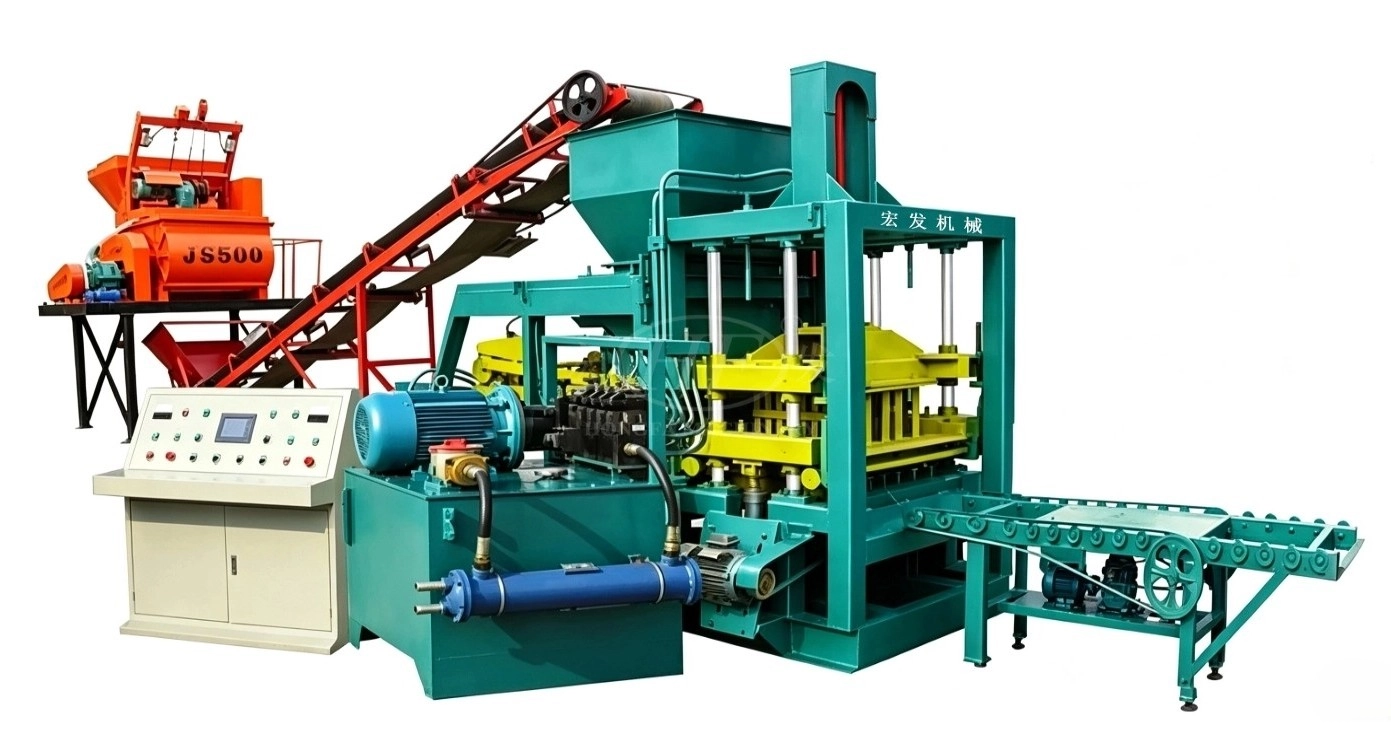
2. Fully‑automatic PLC Control Design, Integrated Mechanical‑electrical‑hydraulic System with High Automation Level
QT4‑15B brick making machine takes a PLC programmable controller as the core control unit, integrating mechanical, micro‑electronic and hydraulic technologies. Full‑process step‑by‑step automatic linkage is realized for pallet feeding, material distributing, pressing‑vibrating, demoulding and brick discharging. It supports two automatic production modes: single‑cycle mode and continuous mode. A manual mode is also available for commissioning and maintenance. Core electrical and hydraulic components adopt original imported or well‑known domestic spare parts. The equipment runs stably and reliably, hardly suffers failures caused by human misoperation, features low overall failure rate, good durability for long‑term operation and convenient daily maintenance.
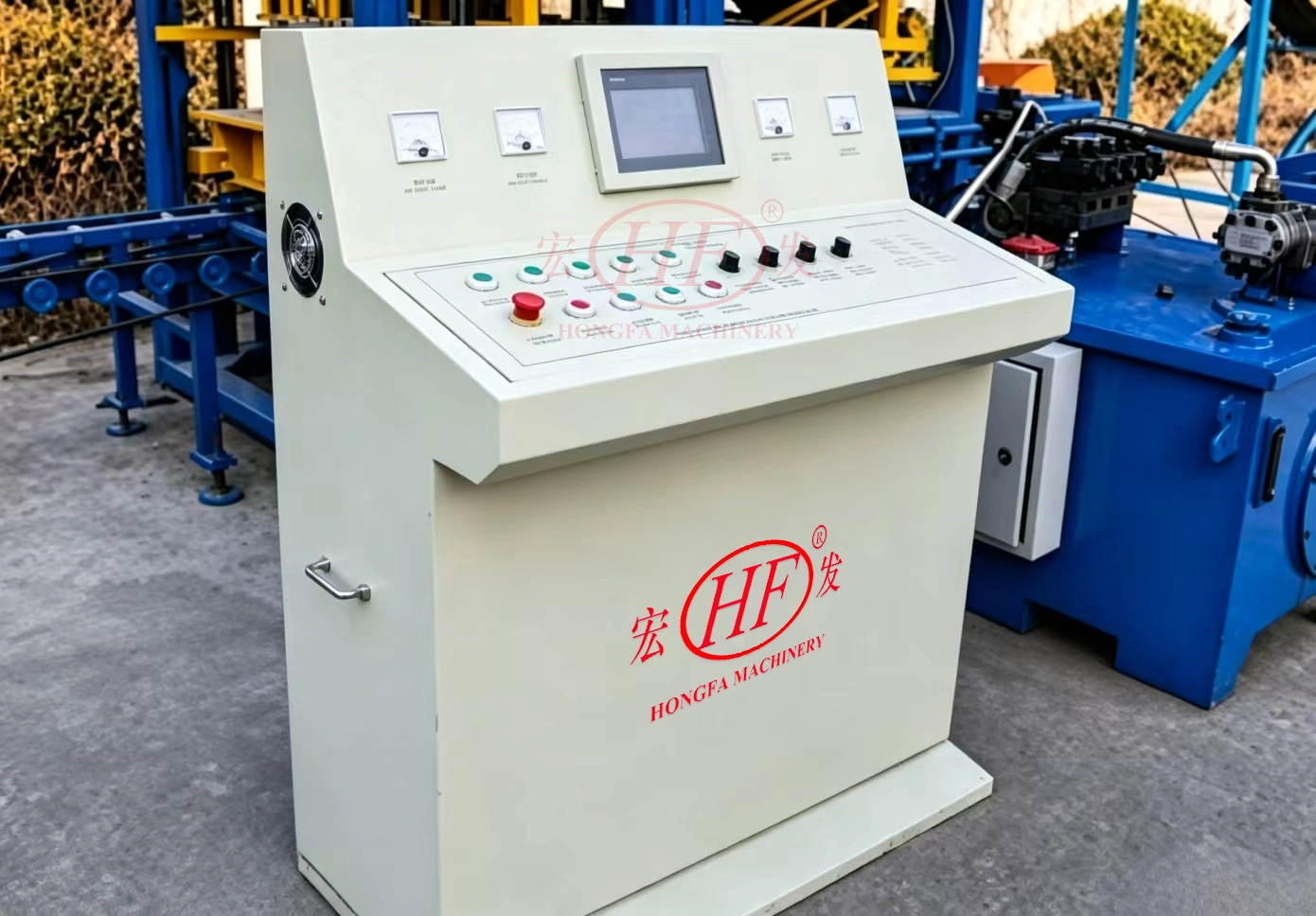
3. Patented Vibration System Combined with Hydraulic Forming Process for Outstanding Compactness and Finished‑product Rate
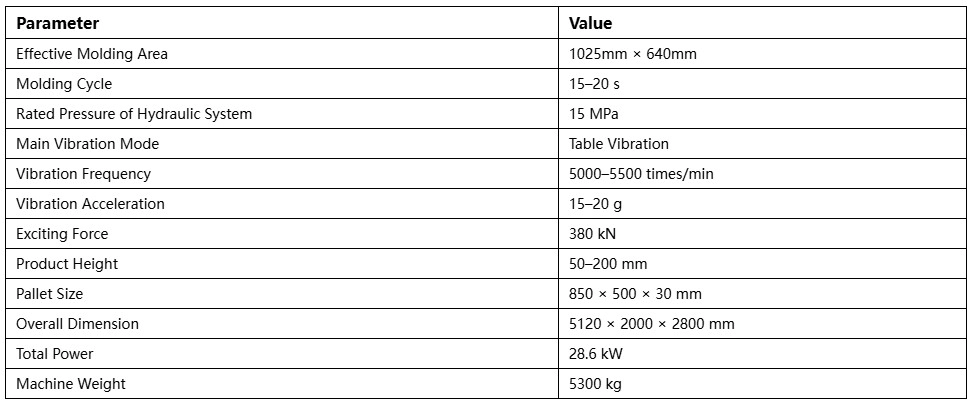
This brick making machine adopts an independently‑developed patented vibration box. The table‑vibration structure delivers exciting force up to 380 kN, vibration frequency of 5000‑5500 times per minute and vibration acceleration of 15‑20 g. It applies a forming method dominated by hydraulic pressure, assisted by mechanical force and vibration compression. Compression‑vibration is performed in the final 0.5 seconds of forming, so the tensile strength of products can exceed 15 MPa with uniform internal compactness. The machine is equipped with a forced synchronous lifting‑lowering mold structure to guarantee uniform thickness of every green brick. Smooth and stable demoulding effectively reduces edge chipping and corner breakage, significantly improves finished‑product qualification rate, and delivers well‑shaped products with high dimensional accuracy.
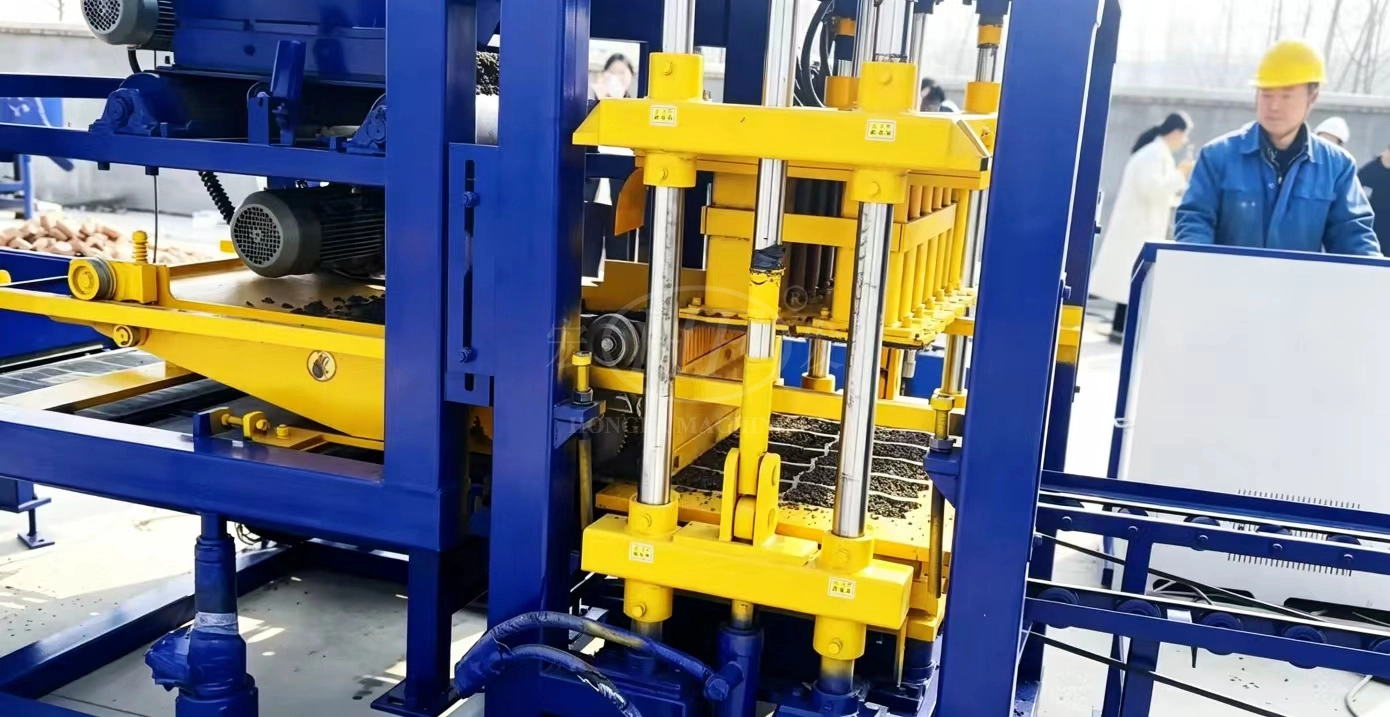
4. High Production Efficiency, Lower Energy and Labor Costs with Excellent Economic Benefits
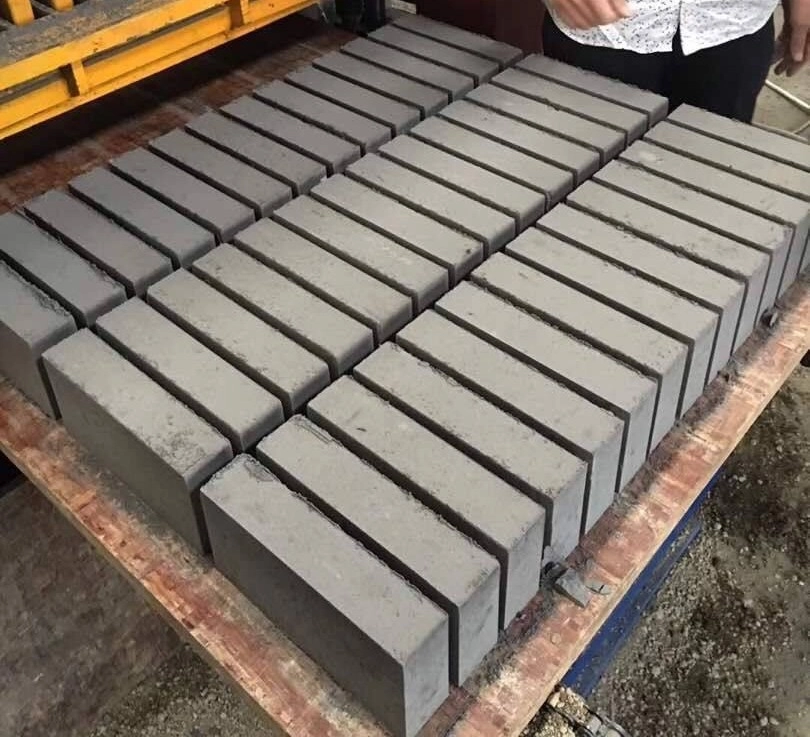
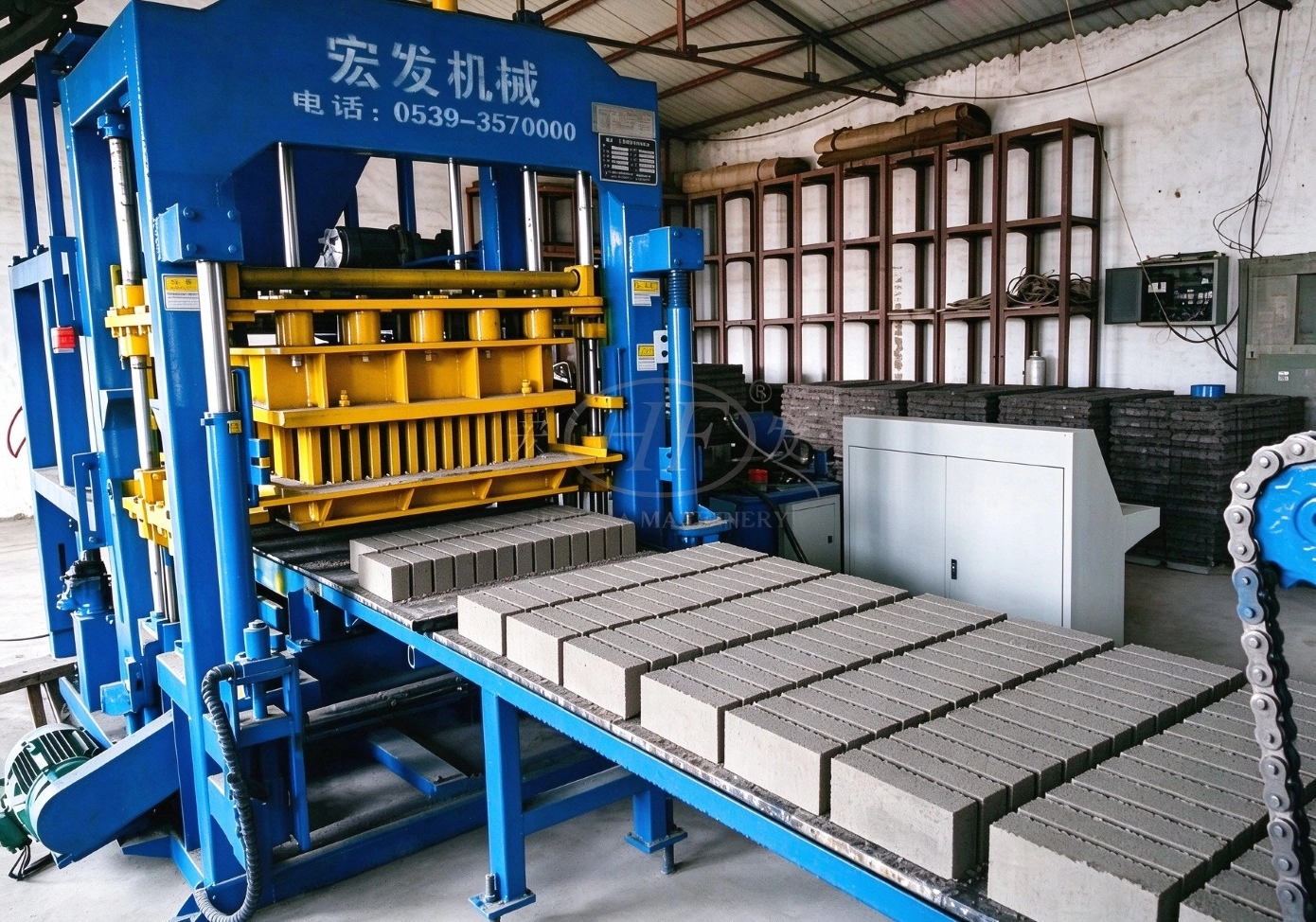
The forming cycle of QT4‑15B brick making machine is only 15‑20 seconds. Each moulding cycle can produce 4 hollow blocks, 28 standard bricks or 12 eight‑hole bricks. Synchronous demoulding for the whole pallet facilitates centralized stacking and transportation and ensures high output per unit time. Optimized power configuration reduces power consumption compared with machines of the same specification. The fully‑automatic production line greatly cuts manual work for on‑site handling and feeding, lowering long‑term labor expenditure. Finished products can adopt low‑cost natural curing without steam‑curing equipment, which further saves production energy consumption and site‑matching investment.
5. Optimized Distributing Mechanism for Uniform Feeding and Consistent Green‑brick Forming
The distributing unit is fitted with a reciprocating rake swinging structure together with front‑end cleaning brushes. During the reciprocating travel of the distributing cart, rake teeth spread raw materials forcibly while brushes clean residual concrete on pressing heads. The duration of vibratory feeding can be adjusted freely. The distributing cart reciprocates 1‑2 times to fully fill the mould box. It avoids green‑brick defects caused by uneven feeding or insufficient material from the source, and ensures consistent material filling volume, forming strength and thickness for every mould.
6. Standardized Installation and Commissioning, Modular Split‑type Structure for Flexible Site Adaptation
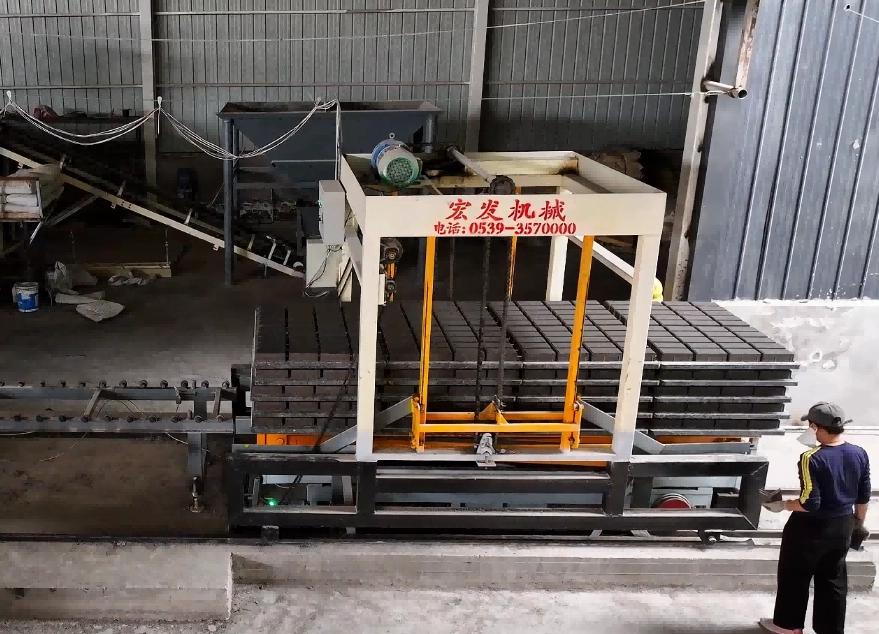
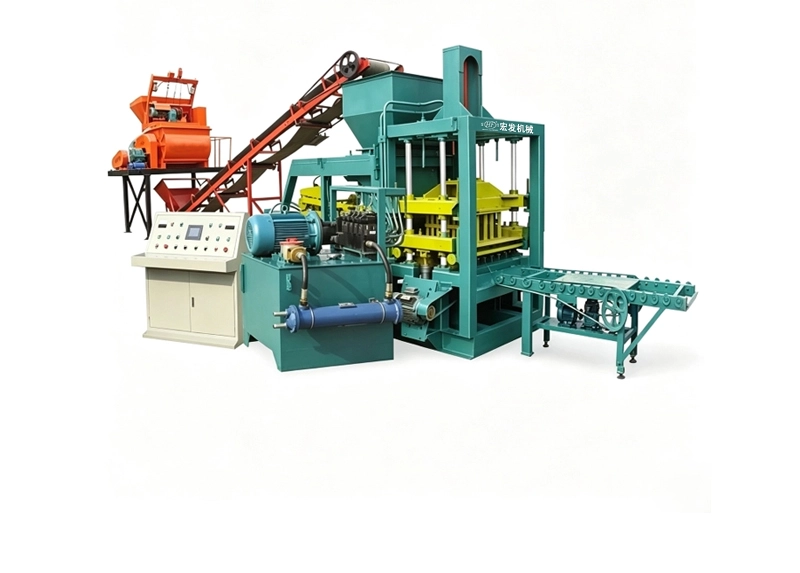
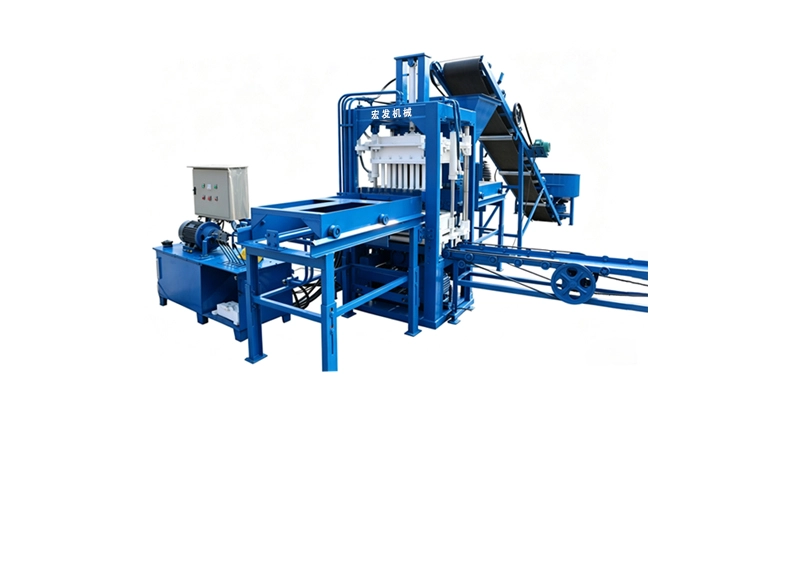
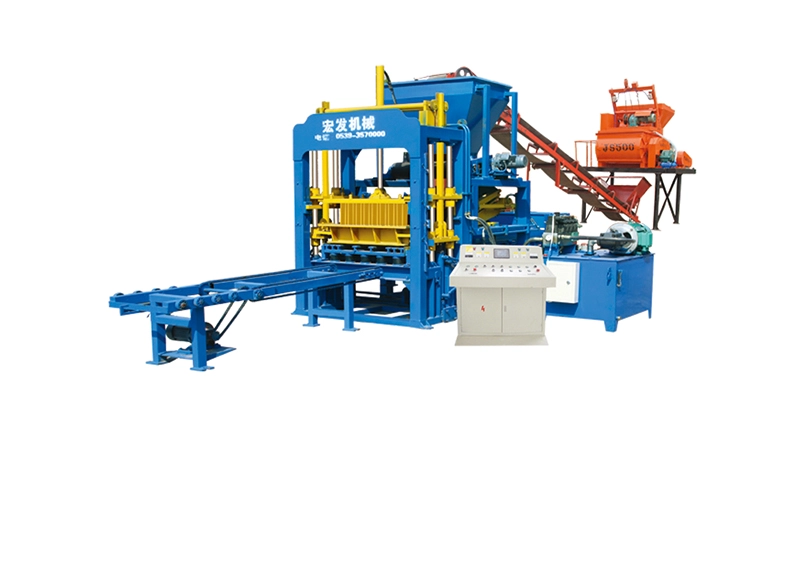
The equipment is divided into six independent modules for transportation: pallet feeder, distributing device, forming main machine, conveyor, hydraulic station and electric control cabinet. On‑site assembly can be completed according to foundation drawings. All mechanisms are installed with aligned central lines and the table height can be flexibly adjusted. Processes of mixing, feeding, forming and curing can be arranged in separate zones without mutual interference. Commissioning supports manual and automatic modes. Pre‑vibration, main vibration, feeding‑vibration duration and system pressure can be fine‑tuned independently. New operators can complete machine commissioning and trial production after simple training.
1. Wide Raw‑Material Compatibility and High Solid‑Waste Mixing Ratio, Multi‑product Capacity for Diverse Demands
The QT4‑15B automatic hydraulic concrete brick making machine features excellent raw‑material compatibility. Various industrial residues including fly ash, cinder and coal gangue can be used for production. The maximum mixing ratio of fly ash can reach 70%, which efficiently consumes industrial waste and complies with policies for eco‑friendly building‑material production. Simply by replacing molds, it can mass‑produce hollow blocks, standard bricks, eight‑hole bricks, paving bricks, grass‑planting bricks, curbstones and other building‑material products. Multiple types of products are realized on one single machine, which greatly cuts equipment procurement costs and meets diversified production orders from small‑and‑medium‑sized brick plants.
2. Fully‑automatic PLC Control Design, Integrated Mechanical‑electrical‑hydraulic System with High Automation Level
QT4‑15B brick making machine takes a PLC programmable controller as the core control unit, integrating mechanical, micro‑electronic and hydraulic technologies. Full‑process step‑by‑step automatic linkage is realized for pallet feeding, material distributing, pressing‑vibrating, demoulding and brick discharging. It supports two automatic production modes: single‑cycle mode and continuous mode. A manual mode is also available for commissioning and maintenance. Core electrical and hydraulic components adopt original imported or well‑known domestic spare parts. The equipment runs stably and reliably, hardly suffers failures caused by human misoperation, features low overall failure rate, good durability for long‑term operation and convenient daily maintenance.
3. Patented Vibration System Combined with Hydraulic Forming Process for Outstanding Compactness and Finished‑product Rate
This brick making machine adopts an independently‑developed patented vibration box. The table‑vibration structure delivers exciting force up to 380 kN, vibration frequency of 5000‑5500 times per minute and vibration acceleration of 15‑20 g. It applies a forming method dominated by hydraulic pressure, assisted by mechanical force and vibration compression. Compression‑vibration is performed in the final 0.5 seconds of forming, so the tensile strength of products can exceed 15 MPa with uniform internal compactness. The machine is equipped with a forced synchronous lifting‑lowering mold structure to guarantee uniform thickness of every green brick. Smooth and stable demoulding effectively reduces edge chipping and corner breakage, significantly improves finished‑product qualification rate, and delivers well‑shaped products with high dimensional accuracy.
4. High Production Efficiency, Lower Energy and Labor Costs with Excellent Economic Benefits
The forming cycle of QT4‑15B brick making machine is only 15‑20 seconds. Each moulding cycle can produce 4 hollow blocks, 28 standard bricks or 12 eight‑hole bricks. Synchronous demoulding for the whole pallet facilitates centralized stacking and transportation and ensures high output per unit time. Optimized power configuration reduces power consumption compared with machines of the same specification. The fully‑automatic production line greatly cuts manual work for on‑site handling and feeding, lowering long‑term labor expenditure. Finished products can adopt low‑cost natural curing without steam‑curing equipment, which further saves production energy consumption and site‑matching investment.
5. Optimized Distributing Mechanism for Uniform Feeding and Consistent Green‑brick Forming
The distributing unit is fitted with a reciprocating rake swinging structure together with front‑end cleaning brushes. During the reciprocating travel of the distributing cart, rake teeth spread raw materials forcibly while brushes clean residual concrete on pressing heads. The duration of vibratory feeding can be adjusted freely. The distributing cart reciprocates 1‑2 times to fully fill the mould box. It avoids green‑brick defects caused by uneven feeding or insufficient material from the source, and ensures consistent material filling volume, forming strength and thickness for every mould.
6. Standardized Installation and Commissioning, Modular Split‑type Structure for Flexible Site Adaptation
The equipment is divided into six independent modules for transportation: pallet feeder, distributing device, forming main machine, conveyor, hydraulic station and electric control cabinet. On‑site assembly can be completed according to foundation drawings. All mechanisms are installed with aligned central lines and the table height can be flexibly adjusted. Processes of mixing, feeding, forming and curing can be arranged in separate zones without mutual interference. Commissioning supports manual and automatic modes. Pre‑vibration, main vibration, feeding‑vibration duration and system pressure can be fine‑tuned independently. New operators can complete machine commissioning and trial production after simple training.

 QT3-15 Automatic Concrete Hollow Block Making Machine | Stable High Output for Hollow Blocks
QT3-15 automatic hollow block machine is specially built for hollow block production. It forms multiple hollow blocks in...
 QT3‑15 Fully‑Automatic Solid Brick Making Machine | Concrete Standard Solid Brick Production Line
Hongfa QT3‑15 fully‑automatic solid brick making machine produces 39 pieces of 240×115×53mm standard solid bricks per mo...
 QT4-15 Automatic Concrete Brick Making Machine
QT4-15 automatic concrete brick making machine is an upgraded version of QTY4-20 with higher output and better product q...
Shandong Hongfa Scientific Industrial&Trading Co.,Ltd ©️2026Copyright © LU ICP B 16041216-4